For many of us, podcasts have become a part of our daily lives. They’re an easy way to consume content because they can fit into (almost) any part of our day. Waiting at sports practices, walking, making dinner, laundry, commuting – podcasts are welcome company. However, even though podcasts have become a huge form of media, they haven’t really made their way into classrooms just yet. But podcasts can be an enormously valuable teaching tool. In my classroom, listening to middle school science podcasts has become my favorite way to make learning science feel, well, real-er.
Why Use Podcasts in Science Class?
The Authenticity Factor: Podcasts combine storytelling, expert voices, and real-world examples to bring authenticity that’s hard to beat. Unlike textbooks that present science as finished knowledge, podcasts often feature scientists discussing current research, failed experiments, and ongoing mysteries. Kids hear the excitement in a researcher’s voice when describing a breakthrough, or the frustration and heartbreak when an experiment doesn’t work as expected or funding dries up. This human element helps students understand that science is done by real people who face challenges, make mistakes, and celebrate discoveries. Middle school science podcasts transform the flat pages of a book into the work of living, breathing humans.
Meet Kids Where They Are: Many of our students already listen to podcasts, music, and other audio content during their free time. This is a generation that was brought up with earbuds and Spotify. So, we have an opportunity to leverage their existing habits for educational purposes. Unlike textbooks or educational videos that clearly signal “school work,” podcasts can feel like a familiar form of entertainment while delivering substantial educational content. A podcast looks like a break from school work, when really it’s another tool in our toolbox to help kids access the content. Think of it as a way to meet kids where they already are.
Differentiation: The audio format is disarming for students who tend to struggle. Students who have challenges with reading comprehension can access complex scientific concepts through listening. The conversational nature of many science podcasts makes abstract topics more relatable and understandable than traditional academic writing. The conversational tone makes complex vocabulary more accessible, too. When students hear scientific terms used naturally in context rather than isolated in definitions, they’re more likely to understand and remember them.
How to Use Podcasts in Your Classroom
- Warm-Ups or Bellringers: Play a 5–10 minute segment at the start of class, then ask a quick reflection question. Example: “What was the most surprising fact you heard?” or “Give me one question you still have.” or “If you had to tell a friend about this in one sentence, what would you say?”
- Spark Curiosity: Before starting a unit, play a podcast episode to get kids excited about learning more. Example: Before teaching ecosystems, play a podcast clip about the Yellowstone wolves that changed an entire river system, or the “immortal jellyfish” that can reverse its aging process and live forever. Before a plate tectonics unit, use a podcast about the massive underwater volcanic eruption in Tonga that was heard around the world, or how scientists discovered that Africa is literally splitting in two. Before studying forces, use a podcast about NASA’s “impossible” engine that breaks the laws of physics, or how Formula 1 drivers experience G-forces that would knock out most people. Before reactions, play a story about the accidental discovery of fireworks, or how a teenager’s science fair project led to cleaning up ocean plastic with chemical reactions.
- Homework: Assign an episode to listen to at home, then hold a short discussion or assign a journal entry the next day.
- Early Finisher Work: Provide a list of science podcasts students can choose from, with follow-up prompts like “summarize the episode in three bullet points,” “write tomorrow’s news headline based on this podcast,” “list 5 new vocabulary words you learned and define them in your own words,” or “identify one claim and explain what evidence supports it.” (For more early finisher ideas, check out my blog with tons of ideas HERE!)
- Cross-Curricular Connections: Partner with your ELA teacher to use science podcasts for listening comprehension activities. Students can analyze podcast structure, identify main ideas and supporting details, and practice note-taking skills while learning science content. Social studies connections emerge naturally through podcasts, too. Explore the societal impacts of scientific discoveries or the historical context of scientific developments.
- Listening Stations: (I don’t have the technology required for this one, but I know that many teachers do.) Set up headphones at stations for small groups. Students rotate through a podcast station with guided questions and vocabulary to complete. Students can pause, replay, and discuss confusing sections within their groups. This approach would work well when you need to provide differentiated activities for students working at different paces.
Great Science Podcasts for Middle School
I’ve compiled a list for you with several middle school science podcasts that you might find useful. I’ve used several of these science podcasts successfully in my classroom, but I haven’t previewed every one on this list. Always listen to an episode first before using it with students! This helps you check that the content and language are appropriate for your grade level and allows you to prepare better discussion questions. Some episodes might be perfect for your classroom, while others could be too advanced or not align with your curriculum. Taking a few minutes to preview will ensure the podcast enhances your lesson rather than creating unexpected issues.
Story-Based Science Shows
Story-based podcasts work well for developing comprehension and narrative analysis skills alongside science content. Have students track the scientific concepts embedded within the story structure, identify the problem-solution sequence, and note how storytelling makes abstract concepts more memorable. Students can record the main scientific principle, supporting evidence presented, real-world applications mentioned, and questions the story raises for further investigation.
- Wow in the World: This remains the gold standard for middle school science podcasts. Hosts Mindy Thomas and Guy Raz present current scientific discoveries through engaging storytelling and humor that appeals to this age group. Episodes typically run 15-20 minutes, making them perfect for classroom use.
- Brains On!: This show takes a question-and-answer format that mirrors middle schoolers’ natural curiosity. The show features kid co-hosts alongside adult experts, making scientific concepts accessible without talking down to young listeners. Their episode archive covers virtually every science topic in middle school curricula.
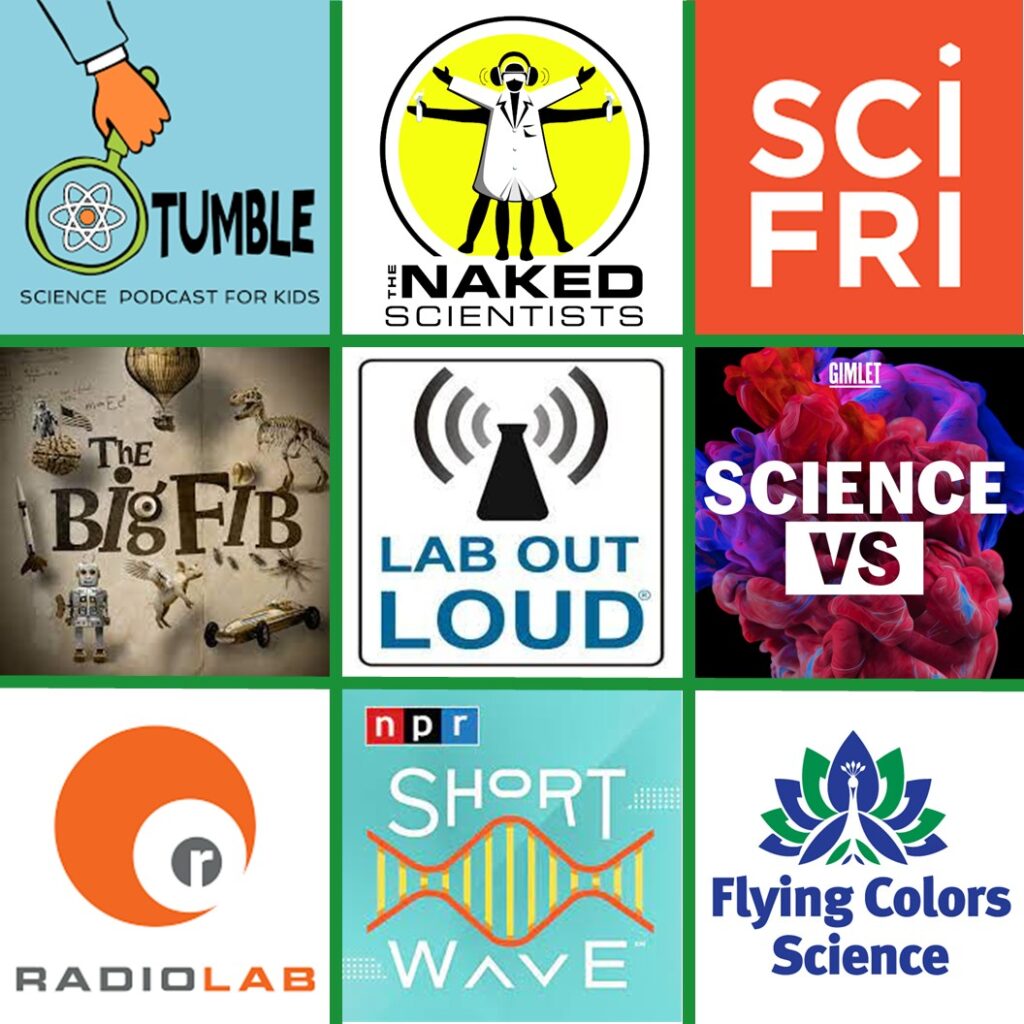
- Tumble Science Podcast for Kids: This podcast focuses on the stories behind scientific discoveries. Each episode follows real scientists as they investigate questions and solve problems. The narrative structure helps students understand that science is an ongoing process of inquiry rather than a collection of established facts.
- Smash Boom Best: This debate-style podcast from the makers of Brains On! pits two topics against each other in a fun competition format. While not exclusively science-focused, many episodes tackle scientific topics and teach critical thinking skills as students evaluate competing arguments.
Current Events and Discovery Shows
These podcasts help students connect classroom learning to ongoing scientific research and discoveries. Students should focus on identifying recent developments, understanding why research matters, and recognizing how scientific knowledge evolves. Have them record the research question being investigated, methodology mentioned, findings or conclusions, implications for society, and connections to topics they’re studying in class.
- Short Wave: This NPR show provides 10-15 minute episodes covering recent scientific developments. While aimed at general audiences, the brief format and clear explanations work well for middle schoolers, especially when teachers provide context and vocabulary support.
- Science Friday Website: This show offers longer-form content that works well for advanced students or when excerpted into shorter segments. Their education team provides discussion guides and activities for many episodes.
- Radiolab Website: While designed for general audiences, select Radiolab episodes work well for advanced middle schoolers when teachers preview content. The show’s innovative audio production and storytelling approach makes complex scientific concepts engaging. Episodes vary significantly in content and complexity, so careful selection is essential.
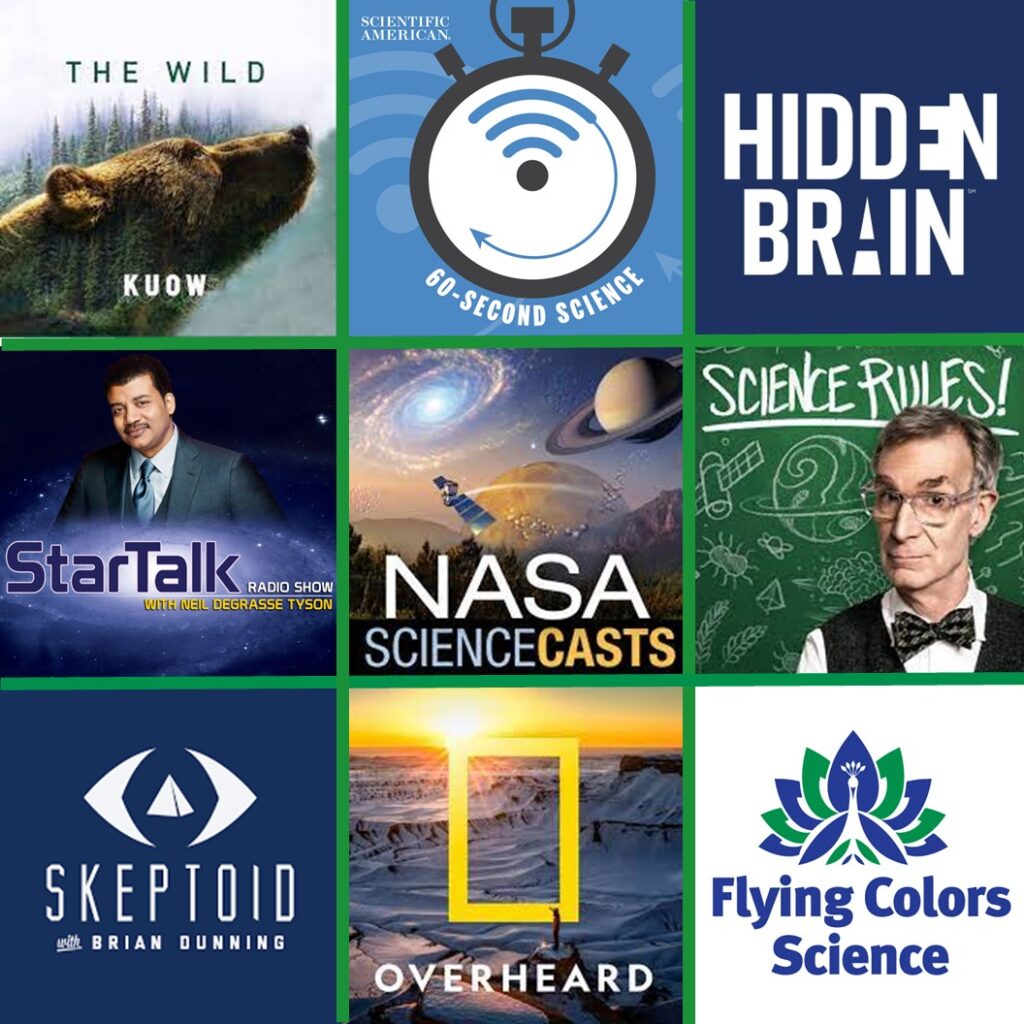
- 60-Second Science Website: These brief Scientific American podcasts provide quick updates on current research. The one-minute format works well for warm-up activities or daily science news segments.
Space and Astronomy Focused
Space-focused podcasts provide opportunities for students to explore scale, technology, and the scientific process in extreme environments. Students can track mission objectives, technological challenges, scientific instruments used, discoveries made, and how space research connects to Earth-based science. These episodes often showcase engineering design process and problem-solving strategies.
- NASA’s Curious Universe: These short, exciting episodes focus on space exploration and new discoveries. NASA produces engaging content that connects current missions to broader scientific concepts, making space science accessible and relevant.
- StarTalk (select episodes): Neil deGrasse Tyson’s podcast covers astronomy and space science topics. While designed for general audiences, carefully selected episodes work well for advanced middle schoolers interested in space science. Teacher preview is essential due to varying content complexity.
Specialized Topic Podcasts
These interviews and deep-dive episodes help students understand diverse scientific careers and research methodologies. Students should focus on the scientist’s background, research focus, tools and techniques used, challenges faced, collaboration with other scientists, and advice for aspiring researchers. This genre works particularly well for career exploration and understanding the human side of scientific work.
- Ologies Website: Host Alie Ward interviews scientists about their specific fields of study. While designed for older audiences, many episodes work well for middle school when teachers preview content and select appropriate segments. (Very important to preview these yourself!) The host’s enthusiasm and humor make complex topics engaging. See below for a more middle-school safe version…
- Smologies takes episodes from Ologies and edits them into shorter, classroom-appropriate versions. Each episode explores a specific scientific field with an expert, making complex topics accessible to middle schoolers. The bite-sized format (typically under 30 minutes) and age-appropriate editing make this an excellent alternative to the full Ologies episodes.
- Earth Rangers Podcast Website: This podcast focuses on environmental science and conservation. Episodes often feature young environmental activists, making the content particularly relevant for middle schoolers interested in environmental issues.
- Science Vs (select episodes): This podcast examines popular myths and trends through scientific evidence. While some episodes contain mature themes, carefully selected episodes work well for older middle schoolers learning about scientific methodology and critical thinking.
- Hidden Brain (select episodes): This NPR podcast explores psychology and human behavior through scientific research. Select episodes that focus on topics like memory, learning, and decision-making work well for middle school students, particularly in life science units covering the brain and behavior.
- Lab Out Loud: This podcast features scientists sharing their research stories in accessible ways. Episodes often include behind-the-scenes glimpses of scientific work that help students understand the research process.
- Overheard at National Geographic: This podcast shares stories from National Geographic explorers and scientists. Episodes cover diverse topics from archaeology to wildlife conservation, often featuring fieldwork stories that engage student interest.
Competition and Game-Based Shows
These interactive formats engage students in critical thinking and evaluation skills. Students can practice identifying credible sources, evaluating evidence, and making reasoned arguments. Have them record the competing claims, evidence presented for each side, evaluation criteria used, their final decision with reasoning, and what strategies helped them determine accuracy.
- The Big Fib: Another production from the Brains On! team, this show challenges kids to identify which adult is telling the truth about their job or expertise. Science episodes help students develop critical thinking skills while learning about various scientific careers.
A Request…
Do you have any favorite middle school science podcasts that I haven’t included here?
Let me know at [email protected]! I’ll add them here!