WELCOME TO THE BLOG

Managing Behavior in Science Labs

Tired of having to worry about behavior during labs? I have ONE TIP that works. For real... one tip.
managing behavior during labs
teach graphing in science

Teach Graphing in Science

Let me tell you a little (mildly embarrassing) story about how I came to discover that I needed to teach graphing in science... and how I increase my students' graphing skills all year long.

Common Misconceptions in Science

A little bit ago, I asked my readers what misconceptions they hear in their science classrooms over and over, year after year. Some were funny, some seemed regional, but for the most part, I was nodding my head in total agreement. I received a huge number of responses! Here are your most common science misconceptions...
common misconceptions in science
https://flyingcolorsscience.com/product/populations-activity-limiting-factors-of-endangered-species/

Population Ecology Activities and Lessons

Need some population ecology activities that pop? Adding real-world connections can take engagement to the next level! Middle schoolers are naturally curious about animals, ecosystems, and the delicate balance of nature - so why not use that to your advantage? I've got lots of interactive activities that help students truly understand population ecology while keeping them engaged and invested in the learning process.

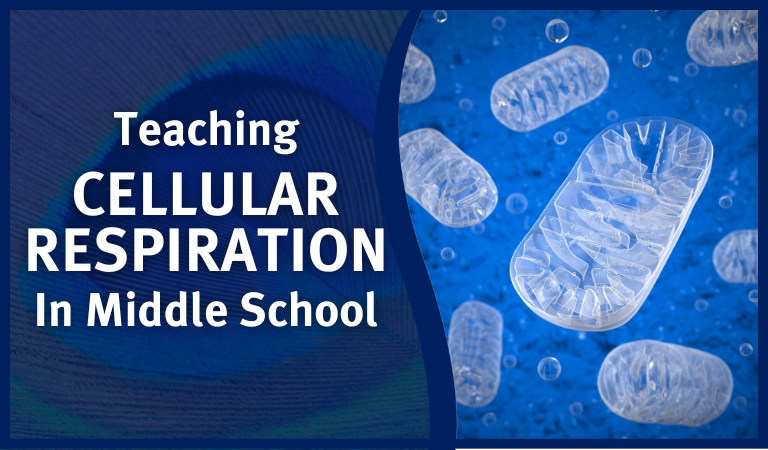
Teaching Cellular Respiration in Middle School

Teaching cellular respiration in middle school is like trying to explain WiFi to your boomer parents - oversimplify it, and they think the internet is magic; go too deep, and you've lost them somewhere between "router" and "bandwidth." Lean too far into "mitochondria are the powerhouse of the cell," and students won’t see the bigger picture. But if you start throwing around terms like "electron transport chain," you'll lose them.
cellular respiration activities for middle school

Photosynthesis Activities for Middle School

"Plants make food so animals can eat them." "Plants turn light into food." "Plants get food from the soil." If you've been teaching photosynthesis in middle school, I'm sure you've heard kids say these things. (And I'm sure they made you cringe.) Maybe it's just my students, but I always have to make it very clear that plants don't make food for animals' sake! They’re not magical vending machines that exist solely to keep animals fed! Is it the same in your classroom?

Best Moon Phases Demo for Middle School

When it comes to teaching moon phases, most activities are either too simplistic or fail to capture the real reason behind the phases we see from Earth. (Hot take: Playing with Oreos is fun, but it doesn’t cut it.) If you need something more accurate to get your students to understand why the Moon changes shape, this activity is the BEST moon phase demo for middle school I've found. It will be a game-changer in your classroom, I swear.
Best Moon Phases Demo for Middle School

Top 5 Ways to Spend Less Time Grading

Are you drowning in grading? Does the thought of the pile of papers on your desk deflate you like a balloon? Do you wish you could spend less time grading and more time… doing anything BUT grading? There’s no doubt about it - grading assignments is one of the biggest time-sucks in teaching science. Here are the top 5 ways I've found to make grading more manageable without sacrificing quality.

Easy Prep Middle School Science Labs

When I first started teaching (don't ask when... it was along time ago), there wasn't much out there for easy prep middle school science labs. It seemed like every lab required supplies or tools from a science catalog, and they were generally extremely HIGH prep. As in, I'd have to stay after school way too long the night before to set it up. So, I've always had a sort of "love/hate" relationship with labs. but not anymore!

10 Engaging Fast Finisher Activities for Science

"I'm Done! What Do I Do Now?" Let's talk about one of the biggest challenges we face as science teachers – pacing activities to work for everyone in the room. Most teachers have very heterogeneous classes these days. We’ve all been there… some students are still working through their lab while others are sitting there with nothing to do. We have some kids that require almost all of our attention and others that could probably sail through college science courses already. It’s a challenging mix.