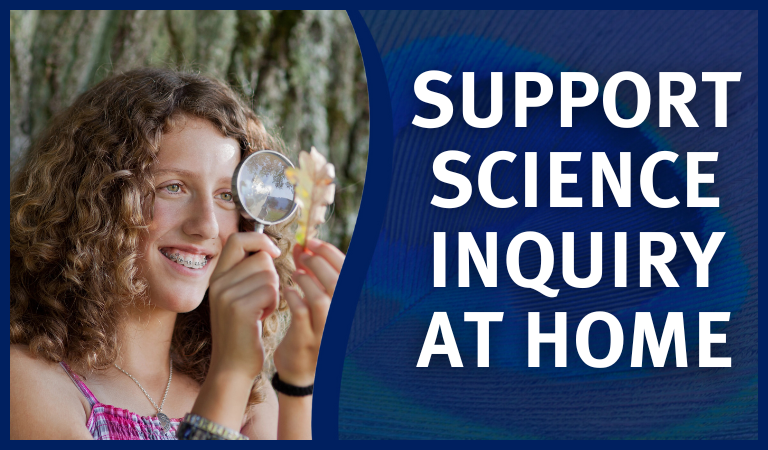


Admittedly, it doesn’t happen often, but once in a while, I’ll have a parent ask me for things they can do to support science inquiry at home and help their child further explore science. Usually, I’ll respond with a few science kits that my own kids used when they were younger or a book recommendation based on their child. But I didn’t have much to offer beyond that.
This year was different.
Our teacher evaluations require us to make a goal for the year, and this year I chose increasing parent communication as my goal. (Truth be told, admin heavily suggested this be our goal!)
So, I created a quarterly newsletter and sent “your child did something amazing” emails.
✍️ I also wrote a letter to parents that I hope will help them support science inquiry at home over the summer. I’m going to post it on Google Classroom and email it home the week before school ends. The letter includes:
🤞 I’m hoping that at least a few parents take the tips to support science inquiry at home over the summer!
To my science teachers… Because it’s a generic letter that any science teacher could send home, I wanted to share it with you. Feel free to email it or post it exactly as it is or make it more personal to your district or grade level. (No need to credit me either way.)
Click HERE to download the letter from my website shop for FREE.
If you’re a parent who has found this blog, welcome! I’m glad you’re here!
Middle school is a critical time for students to develop their understanding of science and how it applies to the world around them. You – parents – can play an essential role in supporting your child’s learning by encouraging science inquiry at home.
Here are some tips for how parents of middle schoolers can support science inquiry at home. ⬇️
Middle schoolers are naturally curious about the world around them. Encourage this curiosity by asking them questions about what they observe and helping them find answers to their questions. Provide opportunities for them to explore their interests and follow their curiosity.
Science is not just a collection of facts. It is a process of asking questions, gathering evidence, and drawing conclusions. Emphasize the importance of this process by encouraging your child to ask questions, design experiments, and analyze data.
Middle schoolers learn best when they are actively engaged in the learning process. Provide opportunities for hands-on learning, such as conducting experiments, building models, or exploring nature. These activities will help your child develop a deeper understanding of scientific concepts.
Help your child see the relevance of science by using real-world examples. Discuss how science impacts their daily life and how it is used in various industries, such as healthcare, engineering, and technology.
Science literacy is essential for success in the 21st century. Encourage your child to read science articles, watch science documentaries, and engage with science media. This will help them develop a deeper understanding of scientific concepts and their applications.
Science inquiry involves trial and error and learning from mistakes. Foster a growth mindset by emphasizing the importance of perseverance and embracing failure as an opportunity for learning.
Here are some specific book recommendations for middle schoolers who are interested in science:
These books cover a range of scientific topics and genres, and they are sure to engage middle schoolers who are interested in science.
Here are some free websites that offer science experiment ideas and resources for parents to do with their kids:
These websites offer a wealth of free resources for parents and their kids to explore science together and have fun while learning.
Stay curious!
As an Amazon Associate I earn from qualifying purchases.
| Cookie | Duration | Description |
|---|---|---|
| cookielawinfo-checkbox-analytics | 11 months | This cookie is set by GDPR Cookie Consent plugin. The cookie is used to store the user consent for the cookies in the category "Analytics". |
| cookielawinfo-checkbox-functional | 11 months | The cookie is set by GDPR cookie consent to record the user consent for the cookies in the category "Functional". |
| cookielawinfo-checkbox-necessary | 11 months | This cookie is set by GDPR Cookie Consent plugin. The cookies is used to store the user consent for the cookies in the category "Necessary". |
| cookielawinfo-checkbox-others | 11 months | This cookie is set by GDPR Cookie Consent plugin. The cookie is used to store the user consent for the cookies in the category "Other. |
| cookielawinfo-checkbox-performance | 11 months | This cookie is set by GDPR Cookie Consent plugin. The cookie is used to store the user consent for the cookies in the category "Performance". |
| viewed_cookie_policy | 11 months | The cookie is set by the GDPR Cookie Consent plugin and is used to store whether or not user has consented to the use of cookies. It does not store any personal data. |