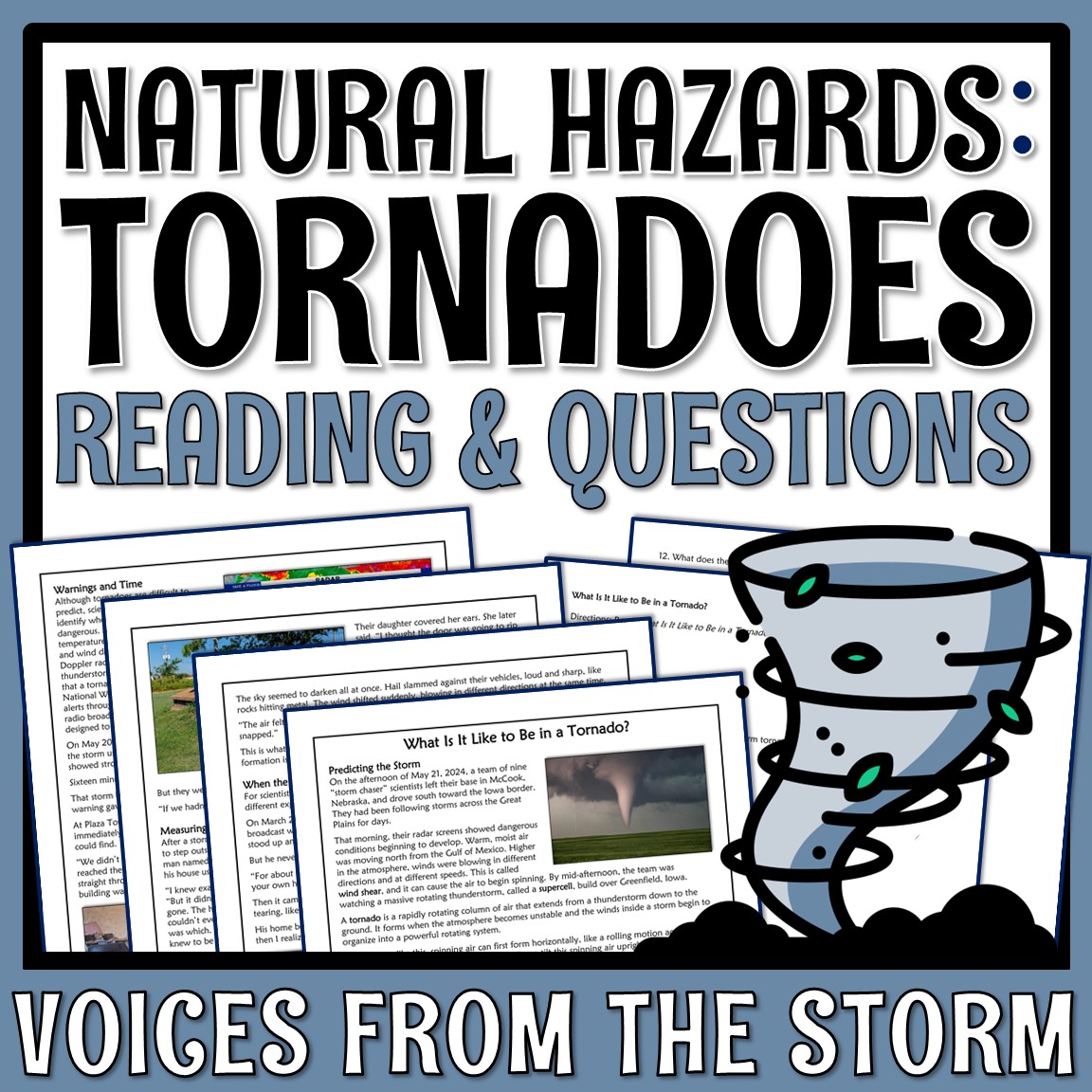
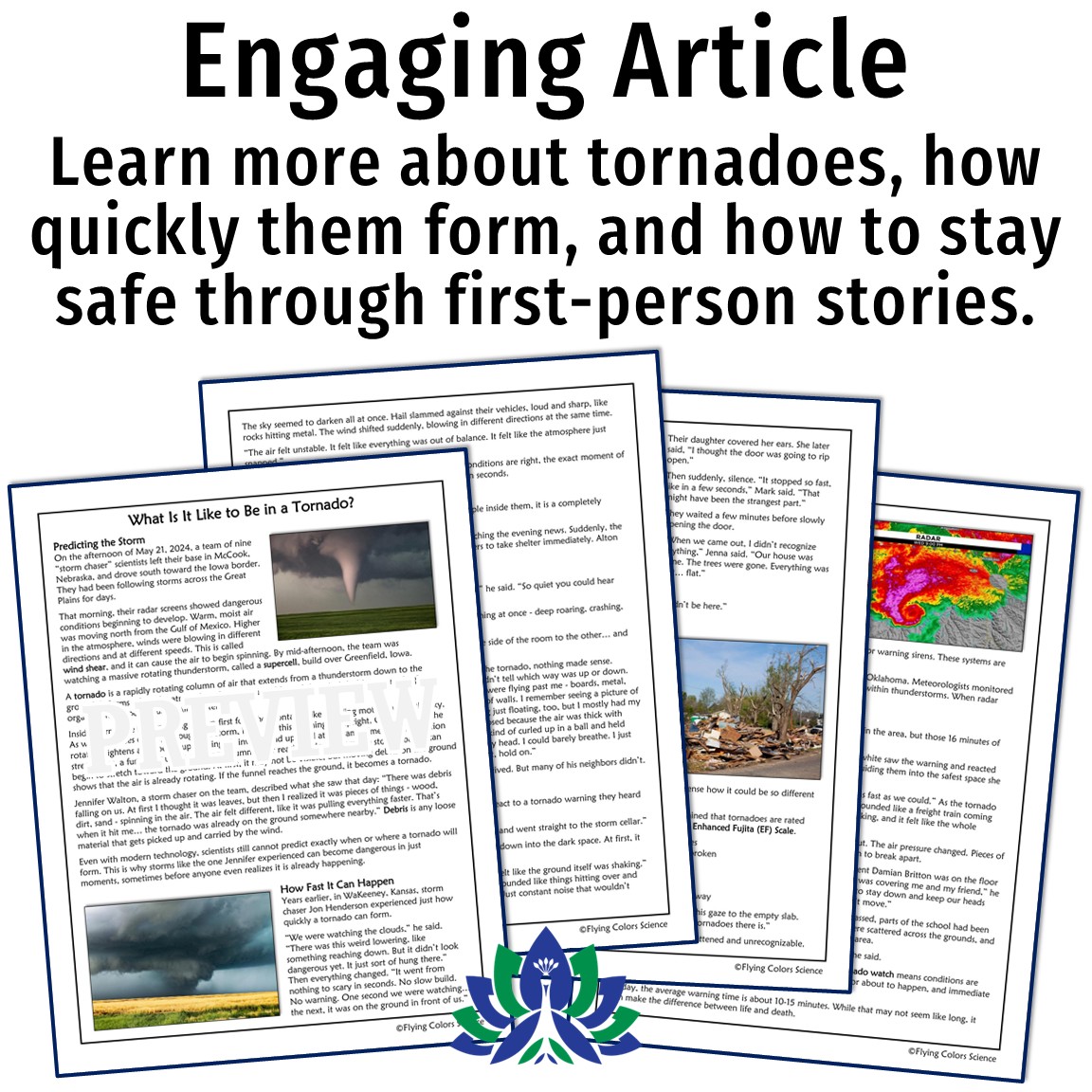
Engage your students with this high-interest tornado reading passage that brings science to life through powerful first-person accounts from people who have experienced these storms.
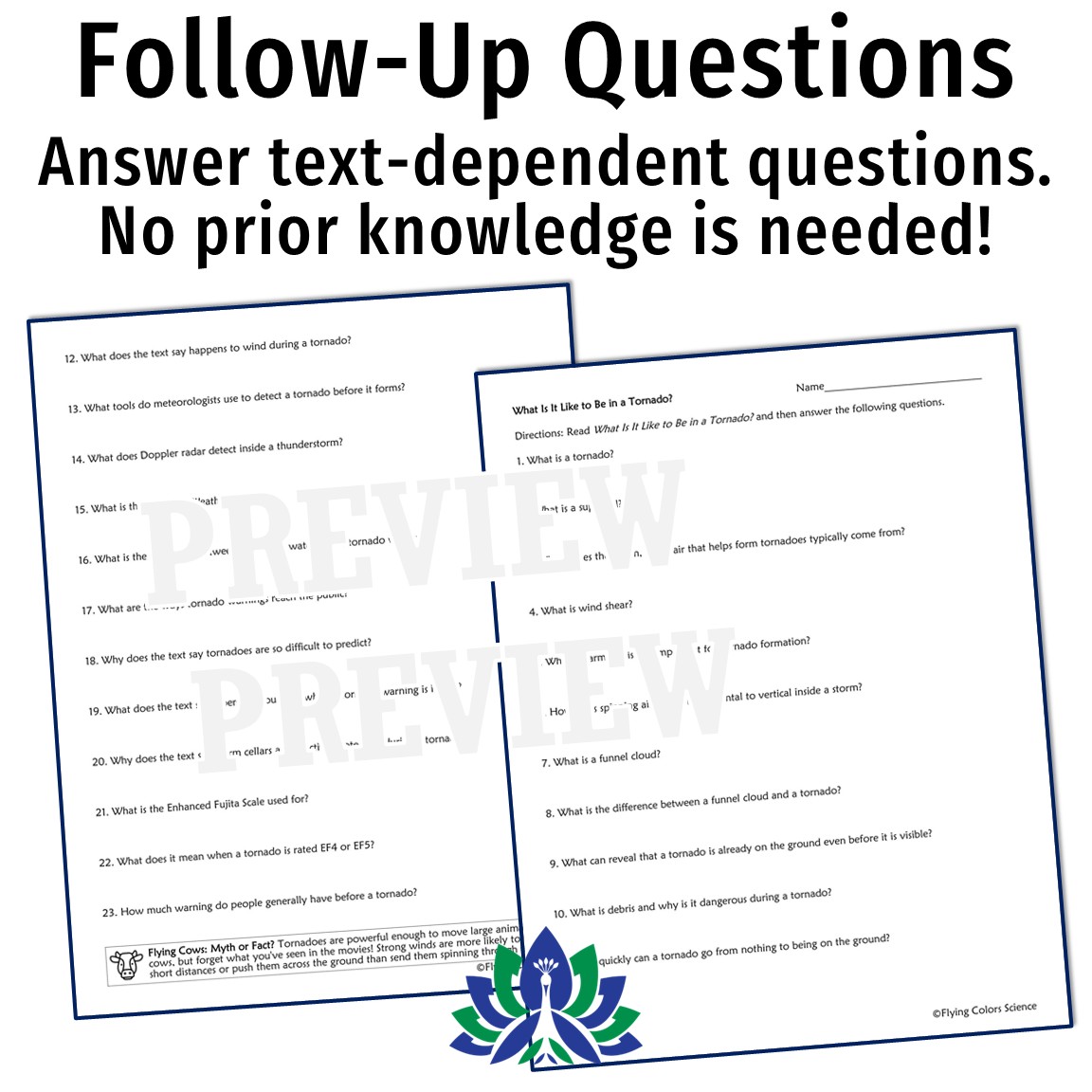
Students will explore how tornadoes form, how scientists predict them, and what it actually feels like inside a tornado, all while reading real stories from storm chasers and survivors.
This lesson blends scientific explanations with personal narratives to make learning about natural hazards both meaningful and unforgettable!
Includes both print and Google Slides options to assign!
In this activity, students will:
Topics Covered:
Related NGSS Standards:
Teacher Notes:
$3.99
| Cookie | Duration | Description |
|---|---|---|
| cookielawinfo-checkbox-analytics | 11 months | This cookie is set by GDPR Cookie Consent plugin. The cookie is used to store the user consent for the cookies in the category "Analytics". |
| cookielawinfo-checkbox-functional | 11 months | The cookie is set by GDPR cookie consent to record the user consent for the cookies in the category "Functional". |
| cookielawinfo-checkbox-necessary | 11 months | This cookie is set by GDPR Cookie Consent plugin. The cookies is used to store the user consent for the cookies in the category "Necessary". |
| cookielawinfo-checkbox-others | 11 months | This cookie is set by GDPR Cookie Consent plugin. The cookie is used to store the user consent for the cookies in the category "Other. |
| cookielawinfo-checkbox-performance | 11 months | This cookie is set by GDPR Cookie Consent plugin. The cookie is used to store the user consent for the cookies in the category "Performance". |
| viewed_cookie_policy | 11 months | The cookie is set by the GDPR Cookie Consent plugin and is used to store whether or not user has consented to the use of cookies. It does not store any personal data. |