
I’m curious… how do YOU feel about AI so far? Do you use any AI for science teachers?
I like it for some things. I have it proofread stuff for me, and it always finds something I’ve messed up. So, that’s helpful.
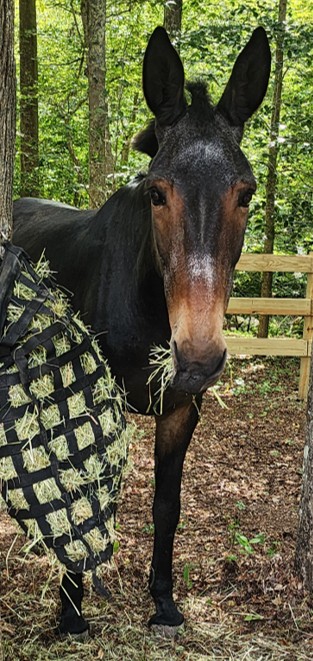
I also use it to learn about different topics. For instance, I’m a new mule owner and I’ve learned a TON about mule care from AI. I even prevented an expensive emergency vet visit by following some step-by-step advice on ChatGPT. True story.
My daughter is a fantastic writer, and her essays often get flagged in AI-detector software that her teacher uses. However, funny enough, her teacher told me that this was exactly how she knew the AI detectors were not correct. The teacher said she has seen my daughter write an essay with her own eyes, only for it to be marked as “likely AI” in her software. So, even AI can’t actually detect AI.
Like way too much.
For example, I asked Claude, “Please give me a list of 5 common physical changes and 5 common chemical changes that would be relatable for and recognizable to middle school students.”
In its answer, Claude listed “Baking cookies in the oven” as a physical change and “Dissolving sugar in tea” as a chemical change.
You read that right. It got the information THAT wrong! HOW?!
(My only guess is that it pulled the answer from a website a middle schooler made!)

Another time, I was working on some photosynthesis and respiration CER stations and needed a few more ideas to go off of.
I asked Claude, “I need to write a question for middle school students that is in the CER format. Please give me two options for CER questions related to photosynthesis at the middle school level. Then, give me a sample student answer in the CER format for each question.”
The first CER question was totally fine – cool.

The second CER that it gave me… OMG.
This is what it gave me for a photosynthesis CER question:
“A scientist measures the oxygen levels in a sealed container with aquatic plants during day and night. During the day, oxygen levels decrease from 12 ppm to 8 ppm. At night, oxygen levels increase from 8 ppm to 6 ppm. Based on this data, do plants release oxygen during photosynthesis?”
The sample student answer that it provided was even worse…
“Sample Student Answer:

Now, OF COURSE, all of us science teachers know that the science is wrong here. I’m sure this wouldn’t have made it past any one of you.
However, what makes me nervous is if I wasn’t so secure on the actual science.
➡️ For example, if I were writing something about DNA, well, I haven’t studied up on all the new and ever-changing advances, so I’m not sure I would know if AI fed me a mistake.
➡️ And a new science teacher who isn’t familiar with ALL the material (we all started like that, right?!) might not know either.
➡️ Or, if I were in a hurry to make something quick (because that never happens 😉), I could likely miss a mistake.
I actually asked ChatGPT why AI gets science wrong, specifically AI for science teachers, and this is what it had to say…

I think the most interesting point from its answer was this… Mixing reliable and unreliable sources: Training data includes both accurate science writing and less accurate sources (like blogs or student essays). The model doesn’t have a built-in way to separate peer-reviewed knowledge from mistakes — so it sometimes blends them.
👀 So, while I love AI for some things, I’m still side-eyeing it for helping me with science stuff.
How do you feel about it? Have you had good luck with AI for science teachers?
I’d love to hear back what AI is helping you with so far! Email me at [email protected]!