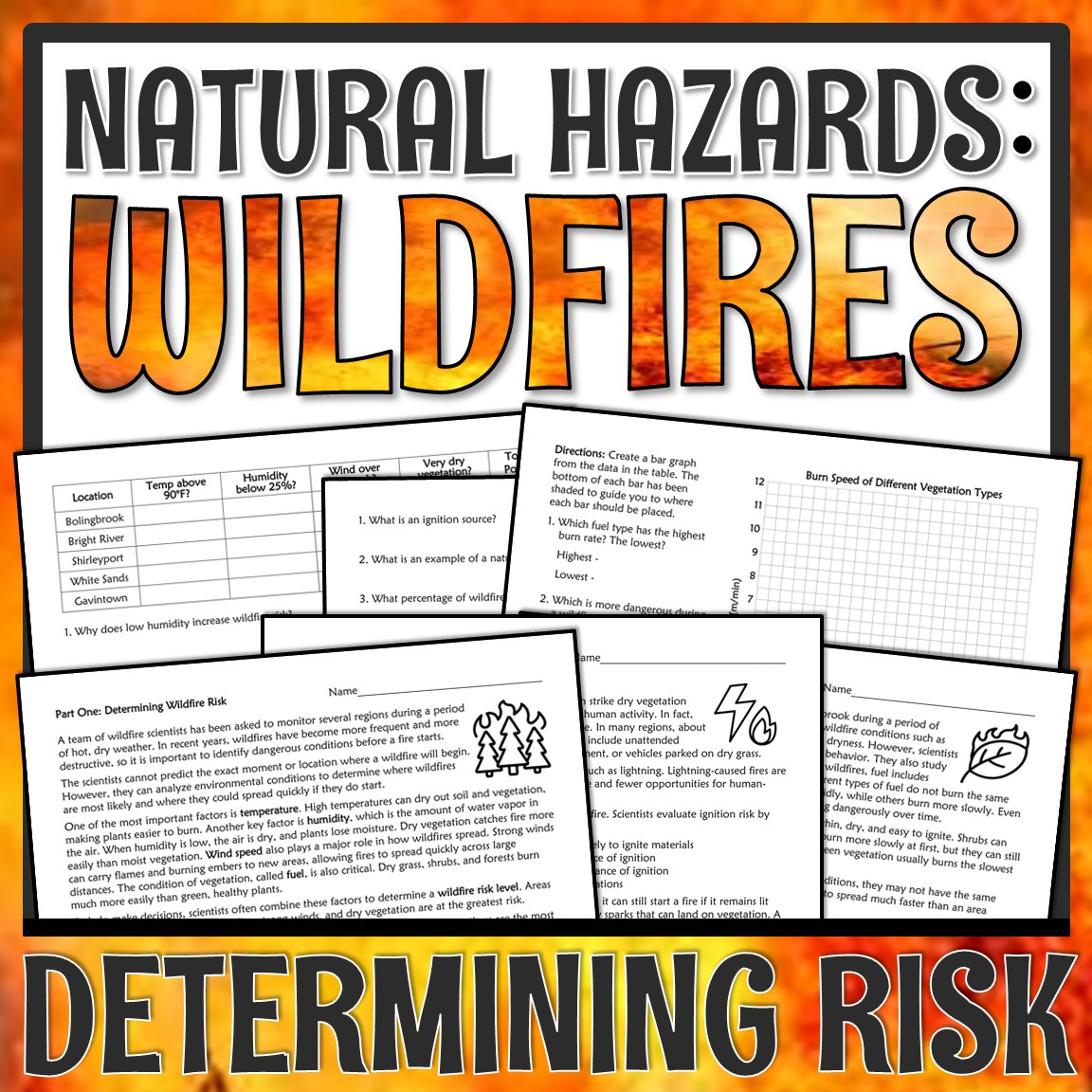
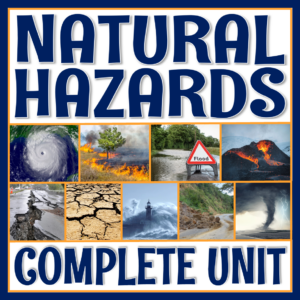
In this wildfires science activity, students take on the role of wildfire scientists to analyze environmental conditions, fuel types, and ignition sources to predict which locations are most at risk and why. Perfect for a middle school natural hazards unit or an NGSS MS-ESS3-2 activity!
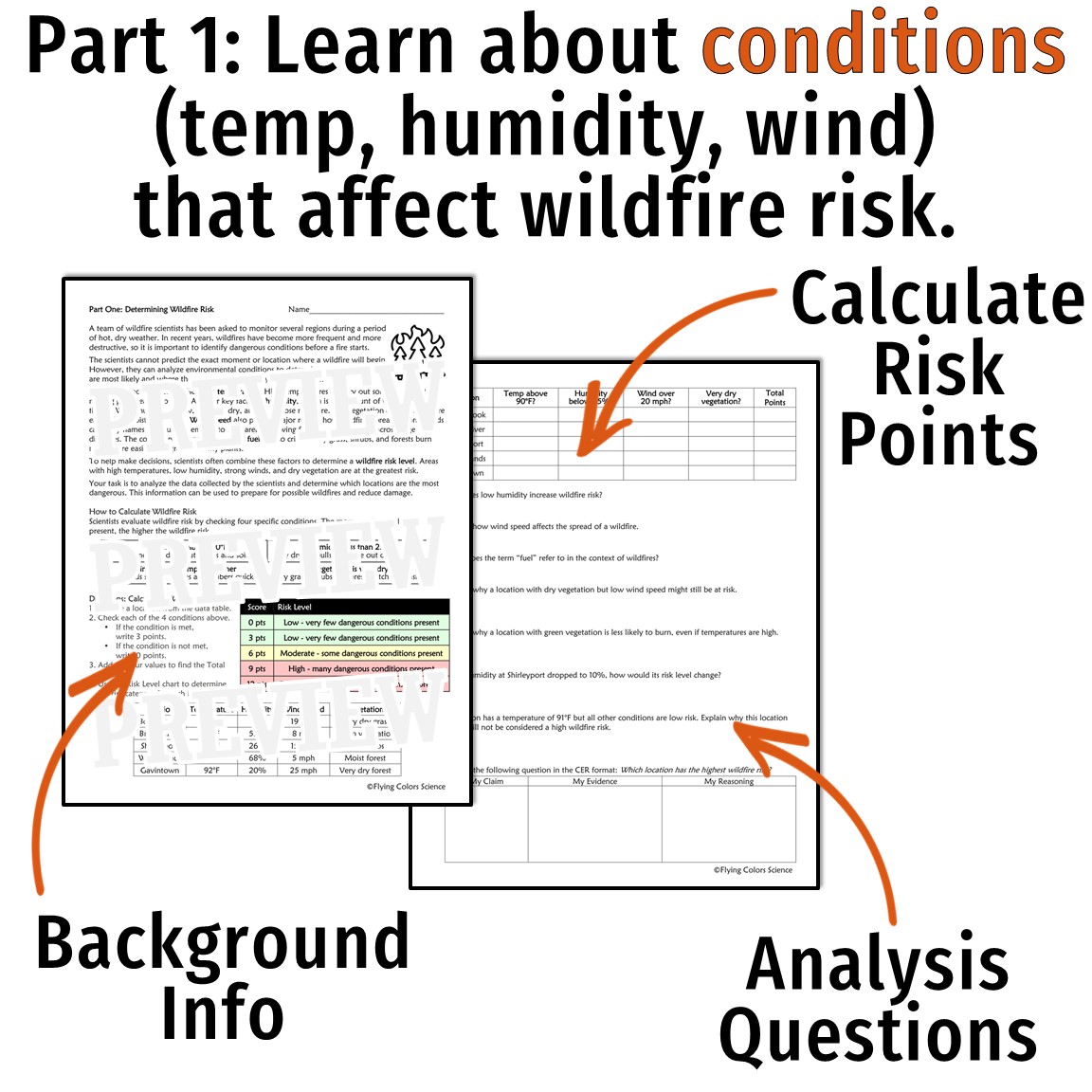
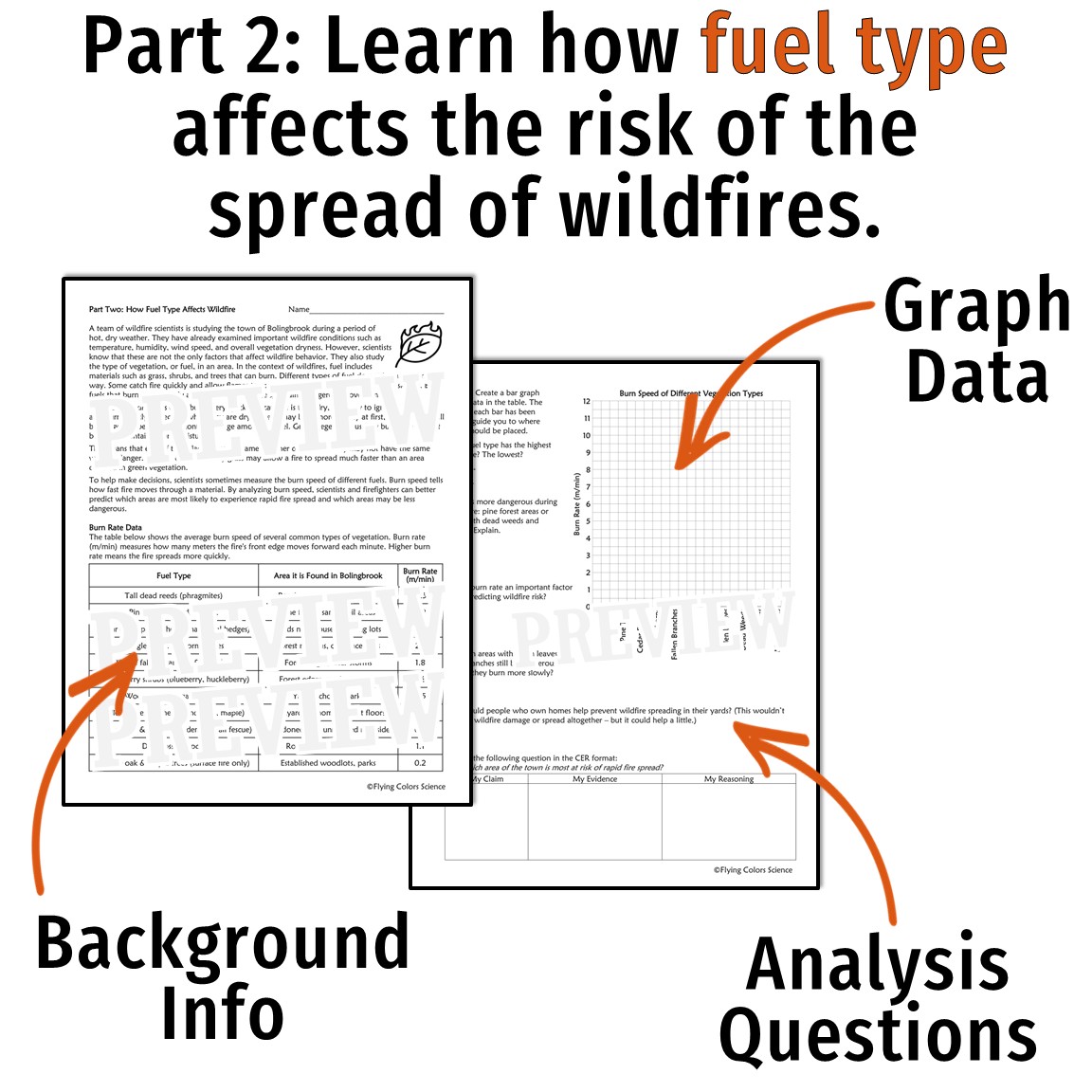
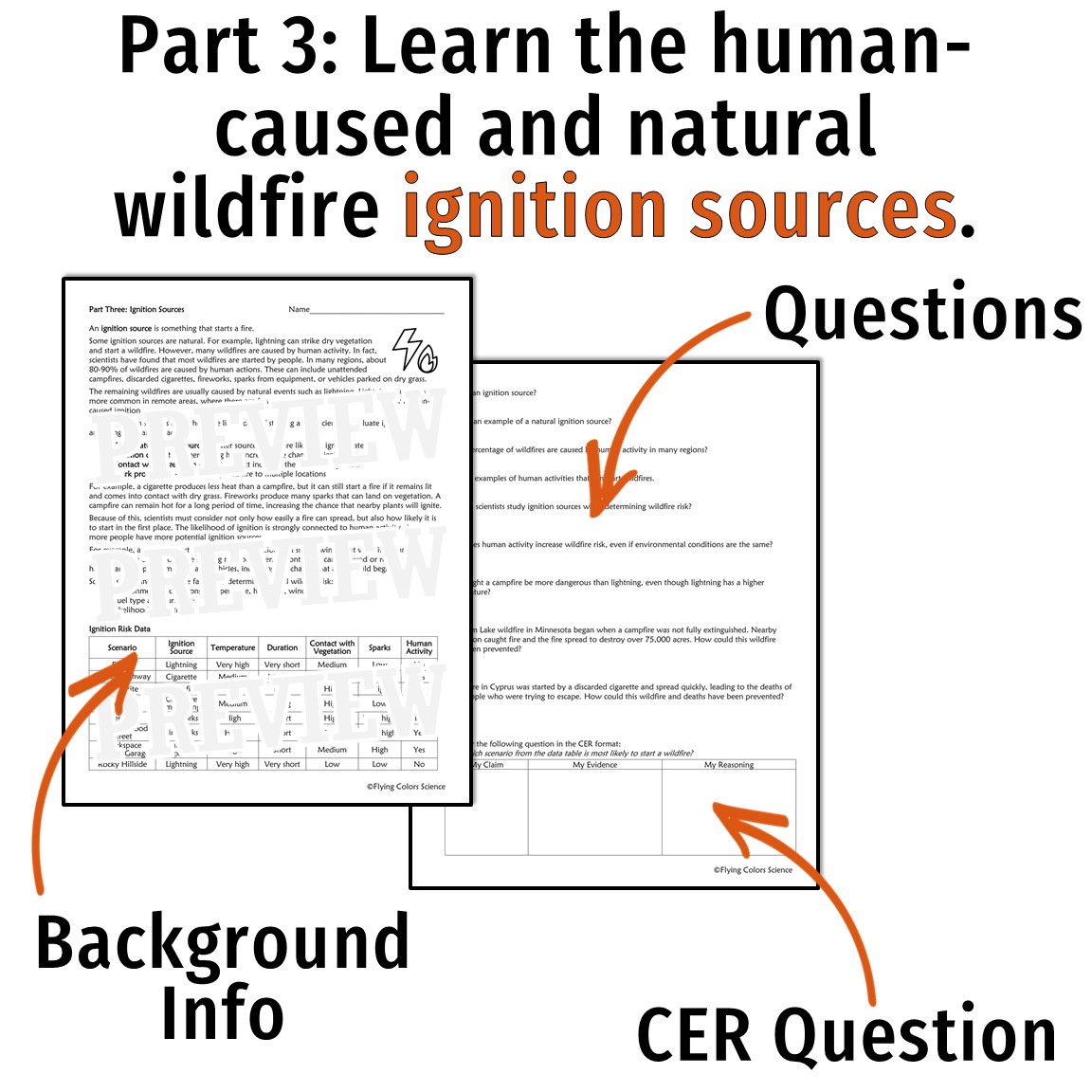
This activity focuses on the true intent of NGSS MS-ESS3-2 by having students evaluate patterns in temperature, humidity, wind speed, vegetation type, burn rate, and ignition data to make evidence-based decisions about wildfire risk and potential spread.
This resource includes:
Teacher Notes:
| Cookie | Duration | Description |
|---|---|---|
| cookielawinfo-checkbox-analytics | 11 months | This cookie is set by GDPR Cookie Consent plugin. The cookie is used to store the user consent for the cookies in the category "Analytics". |
| cookielawinfo-checkbox-functional | 11 months | The cookie is set by GDPR cookie consent to record the user consent for the cookies in the category "Functional". |
| cookielawinfo-checkbox-necessary | 11 months | This cookie is set by GDPR Cookie Consent plugin. The cookies is used to store the user consent for the cookies in the category "Necessary". |
| cookielawinfo-checkbox-others | 11 months | This cookie is set by GDPR Cookie Consent plugin. The cookie is used to store the user consent for the cookies in the category "Other. |
| cookielawinfo-checkbox-performance | 11 months | This cookie is set by GDPR Cookie Consent plugin. The cookie is used to store the user consent for the cookies in the category "Performance". |
| viewed_cookie_policy | 11 months | The cookie is set by the GDPR Cookie Consent plugin and is used to store whether or not user has consented to the use of cookies. It does not store any personal data. |