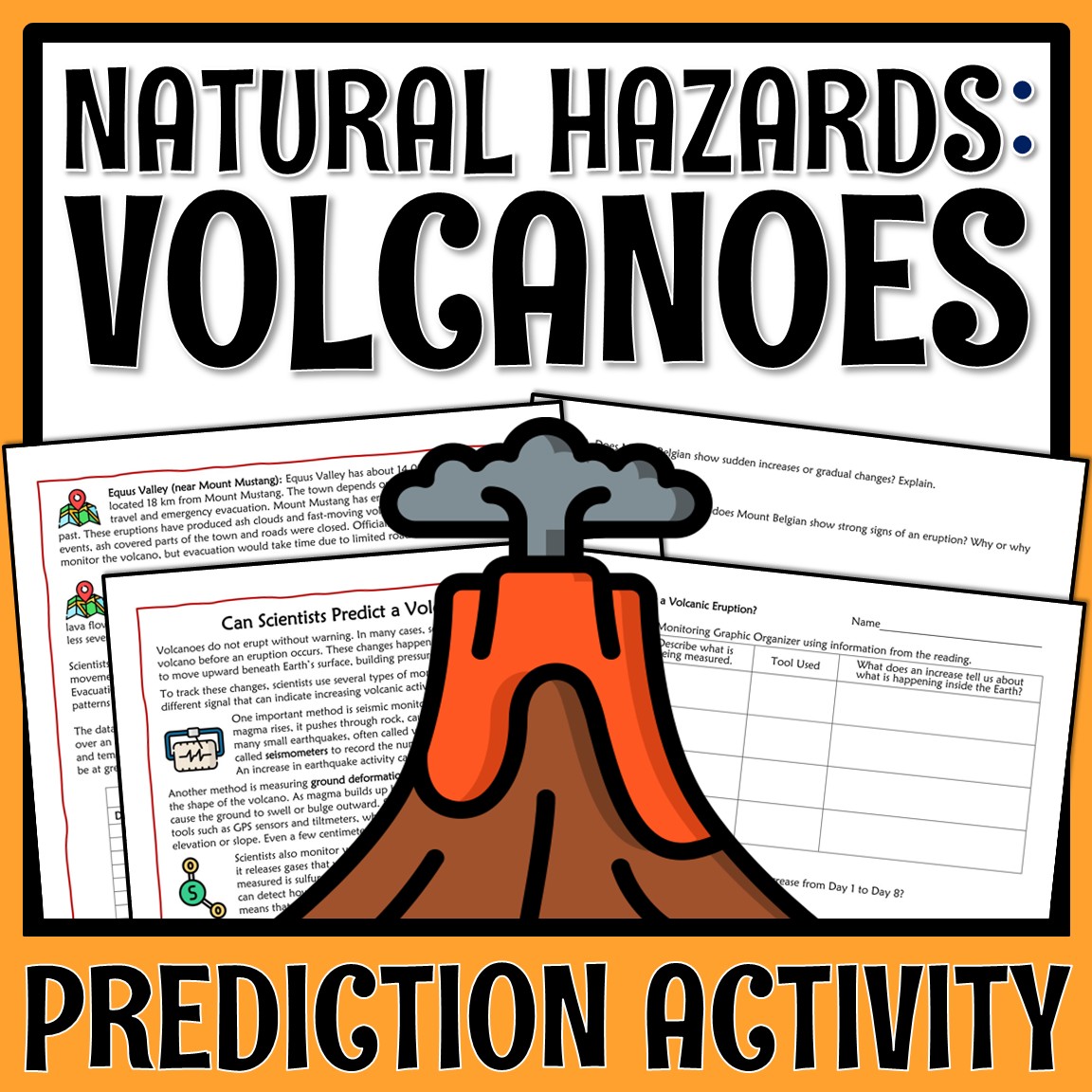
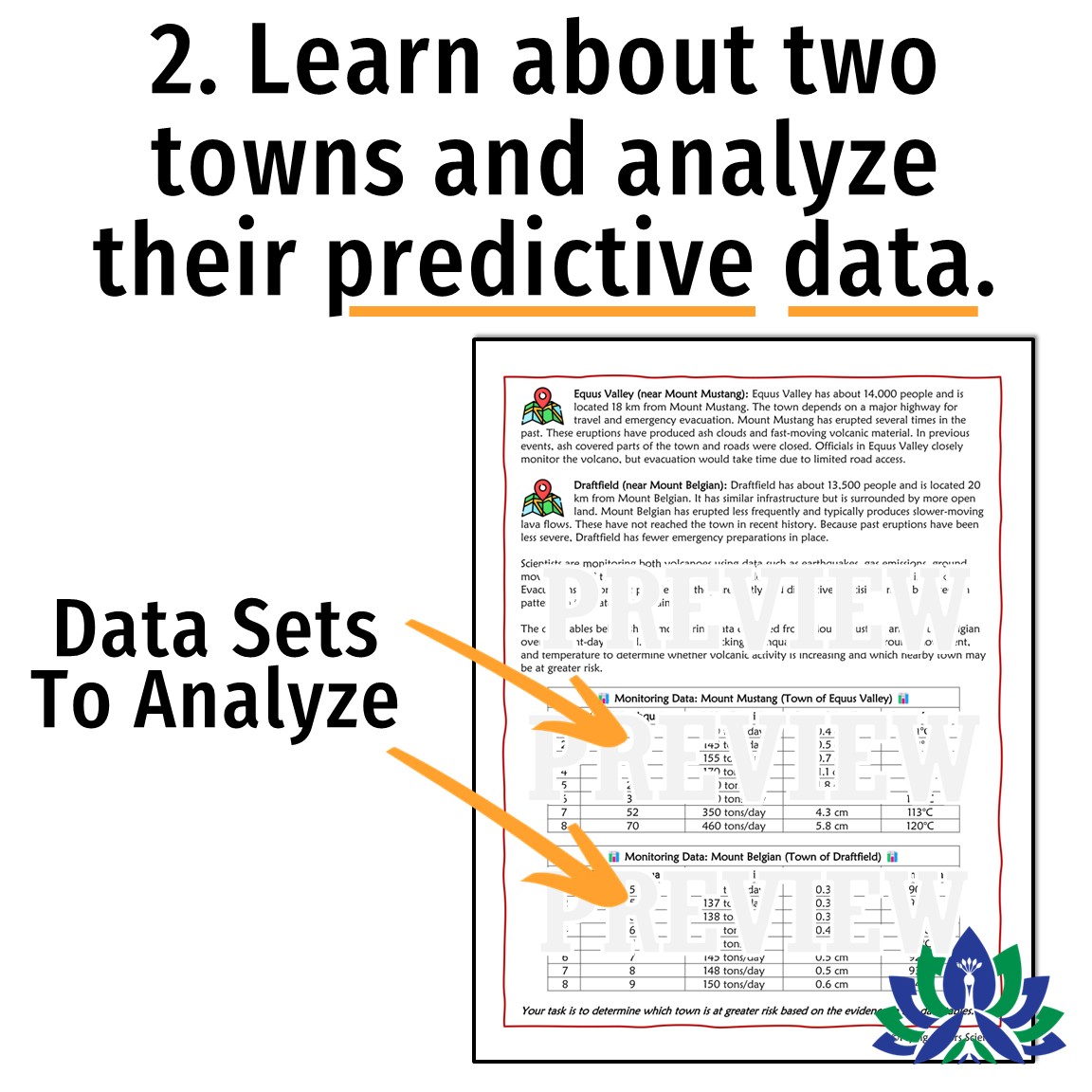
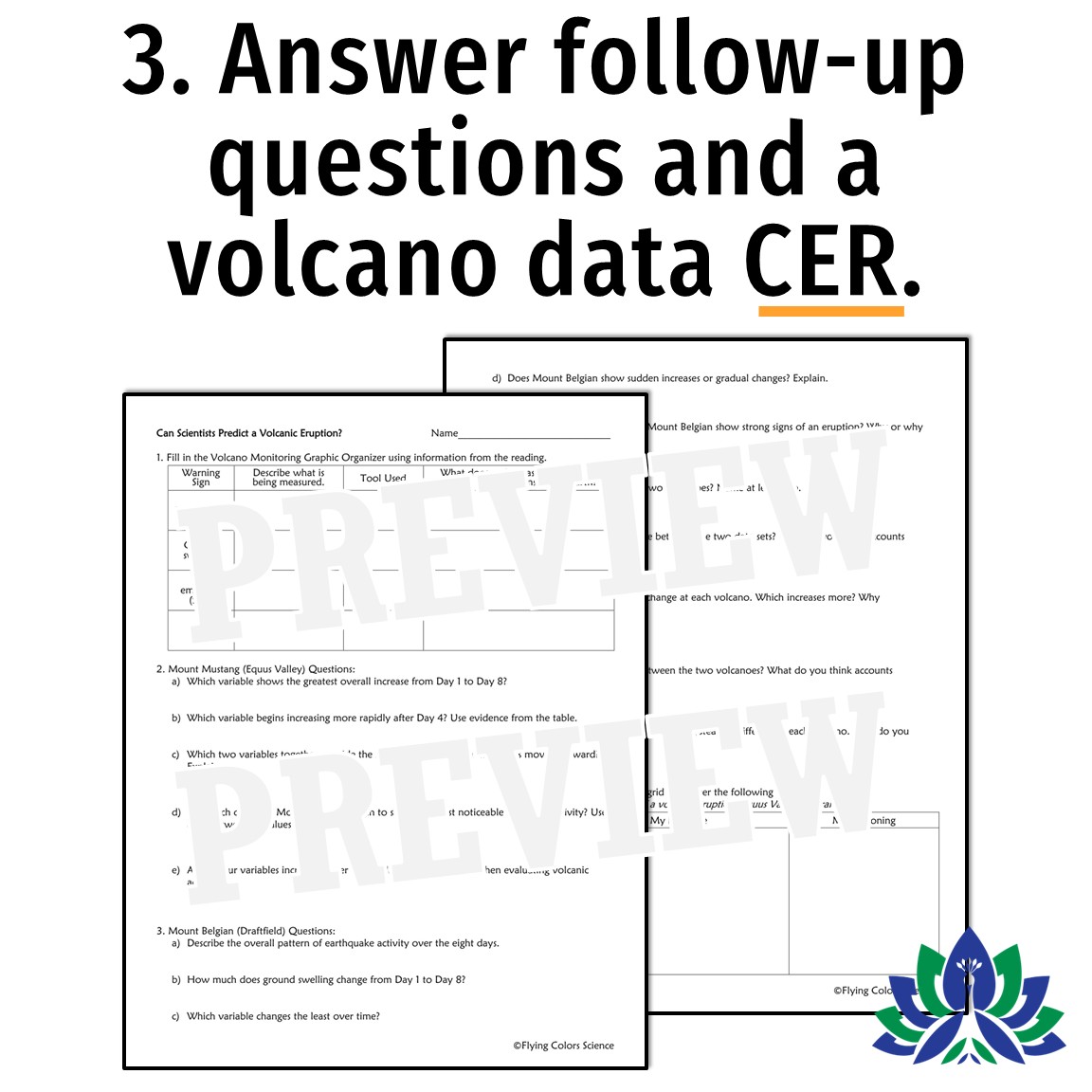
In this monitoring and predicting volcanoes activity, students analyze data to figure out whether scientists can predict a volcanic eruption and which fictional nearby town is at greater risk.
This activity focuses on the true intent of NGSS MS-ESS3-2 by having students evaluate patterns in earthquake activity, sulfur dioxide emissions, ground swelling, and steam temperature to make evidence-based decisions about volcanic hazard risk. This activity is NOT about the anatomy of a volcano or how they work – it is about how future catastrophic events can be forecasted.
This resource includes:
Teacher Notes:
| Cookie | Duration | Description |
|---|---|---|
| cookielawinfo-checkbox-analytics | 11 months | This cookie is set by GDPR Cookie Consent plugin. The cookie is used to store the user consent for the cookies in the category "Analytics". |
| cookielawinfo-checkbox-functional | 11 months | The cookie is set by GDPR cookie consent to record the user consent for the cookies in the category "Functional". |
| cookielawinfo-checkbox-necessary | 11 months | This cookie is set by GDPR Cookie Consent plugin. The cookies is used to store the user consent for the cookies in the category "Necessary". |
| cookielawinfo-checkbox-others | 11 months | This cookie is set by GDPR Cookie Consent plugin. The cookie is used to store the user consent for the cookies in the category "Other. |
| cookielawinfo-checkbox-performance | 11 months | This cookie is set by GDPR Cookie Consent plugin. The cookie is used to store the user consent for the cookies in the category "Performance". |
| viewed_cookie_policy | 11 months | The cookie is set by the GDPR Cookie Consent plugin and is used to store whether or not user has consented to the use of cookies. It does not store any personal data. |