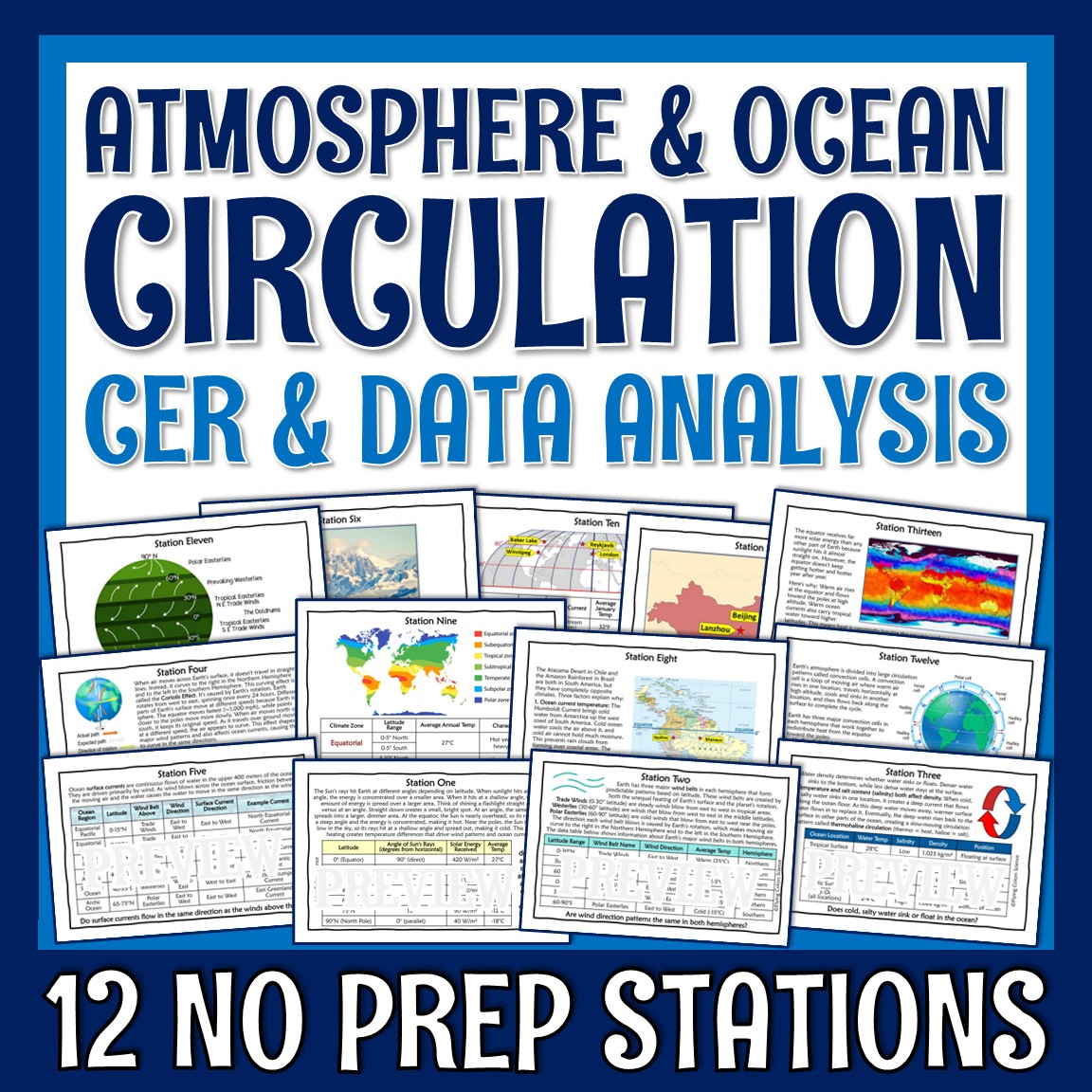
Spark some critical thinking with a Global Winds & Ocean Currents CER Activity! This is an NGSS-aligned MS-ESS2-6 climate systems resource that helps students analyze how atmospheric circulation, ocean currents, latitude, and heat transfer influence global climate patterns.
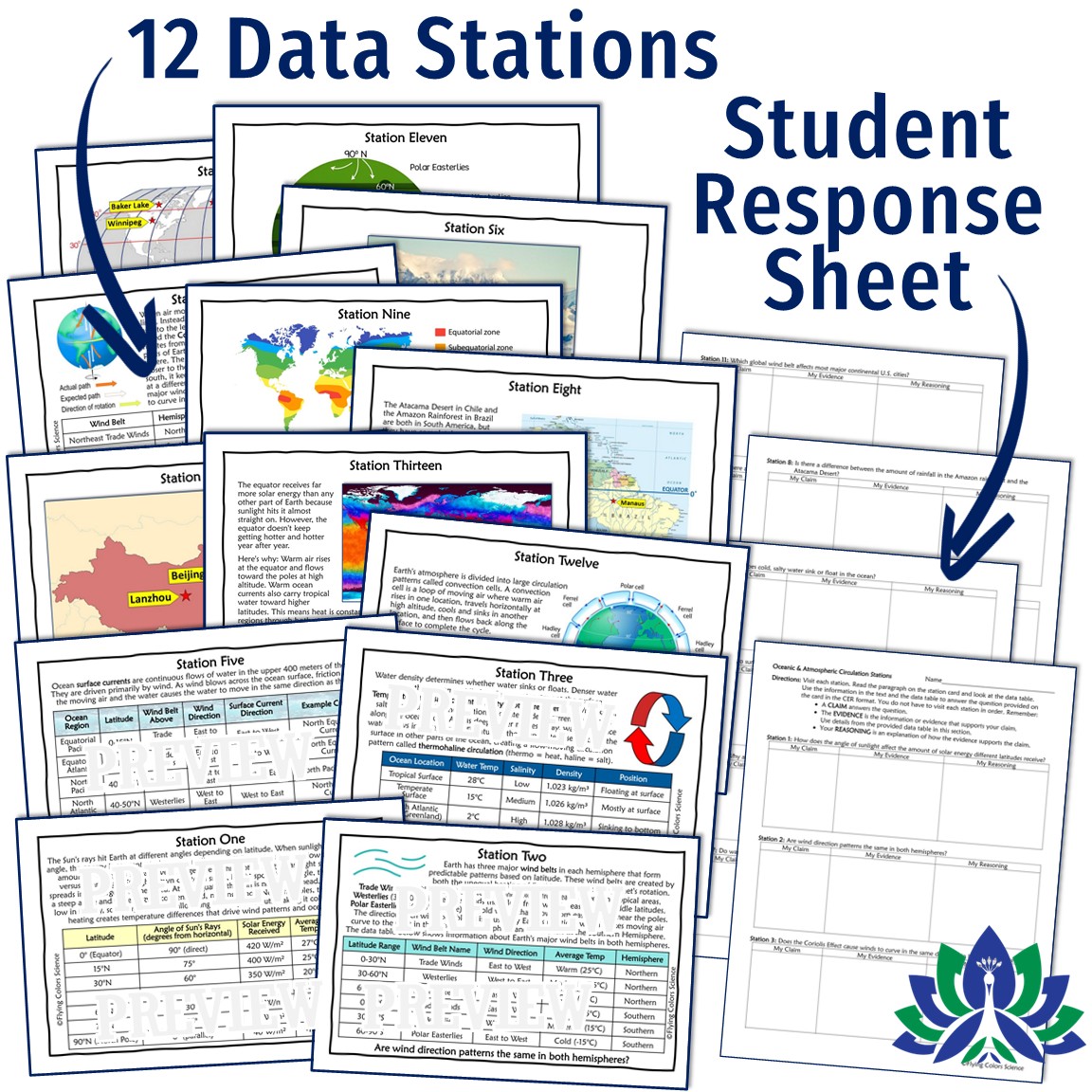
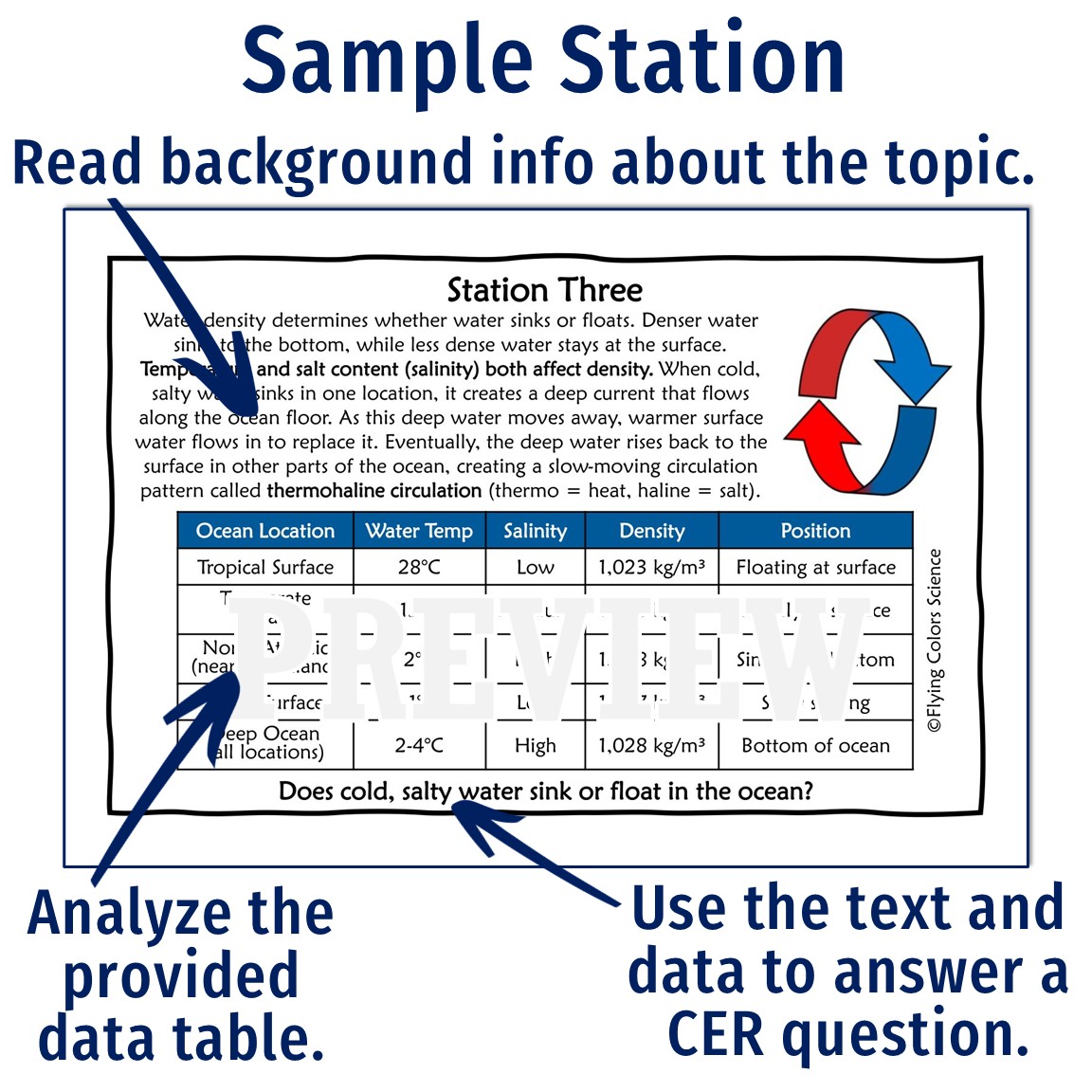
Through 12 engaging CER (Claim, Evidence, Reasoning) data stations, students investigate the Coriolis Effect, convection cells, thermohaline circulation, surface currents, climate zones, the Gulf Stream, and heat redistribution from the equator to the poles. Each station includes a focused reading and data table, allowing students to use evidence directly from the provided information.
Includes both paper-based and digital Google Slides options to assign.
⭐ Get this at a discount in my Atmospheric & Oceanic Circulation COMPLETE UNIT!
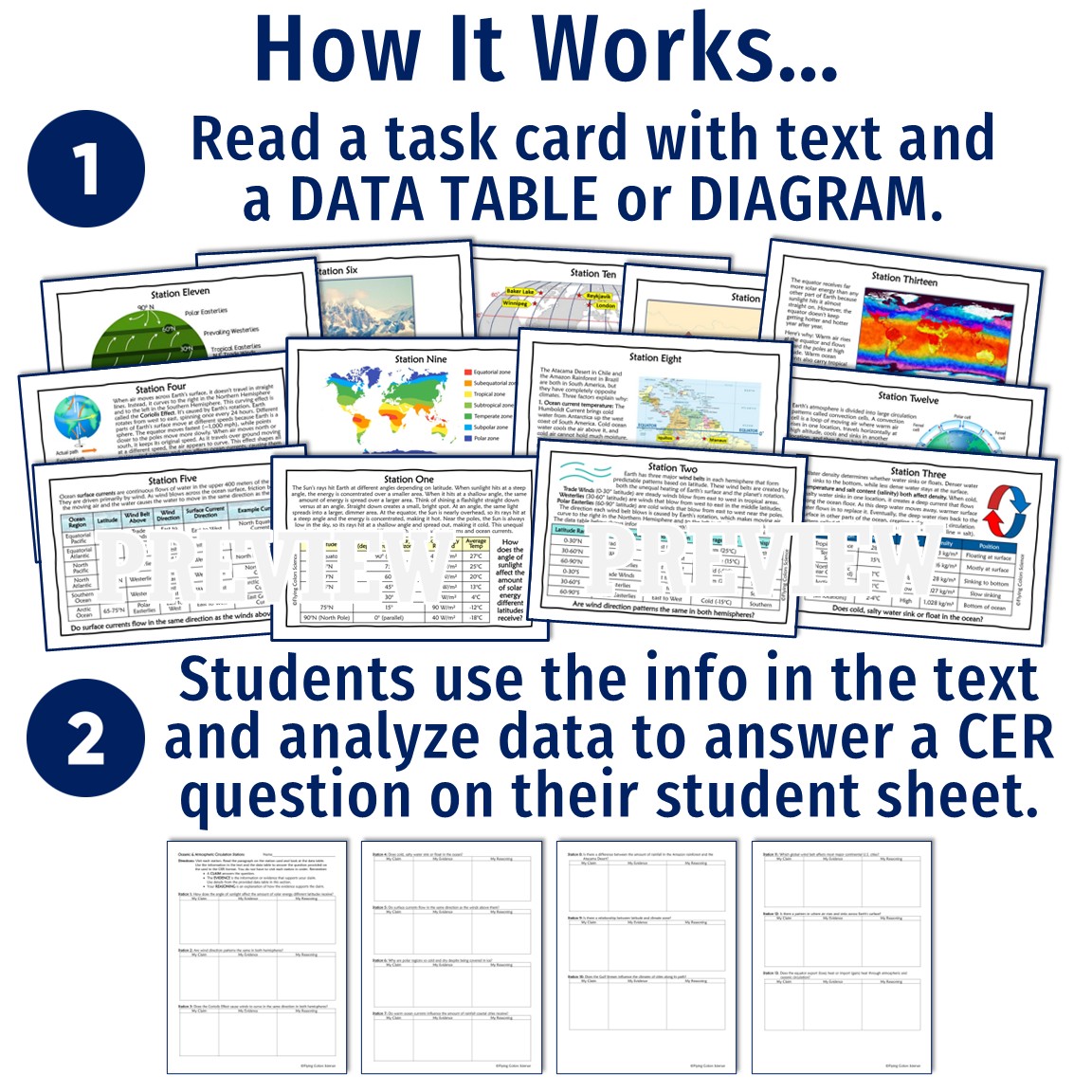
HOW IT WORKS: Students visit 12 NO PREP stations. At each, students will:
12 NO PREP Stations Cover the Following Topics:
Related Standard:
Teacher Notes:
| Cookie | Duration | Description |
|---|---|---|
| cookielawinfo-checkbox-analytics | 11 months | This cookie is set by GDPR Cookie Consent plugin. The cookie is used to store the user consent for the cookies in the category "Analytics". |
| cookielawinfo-checkbox-functional | 11 months | The cookie is set by GDPR cookie consent to record the user consent for the cookies in the category "Functional". |
| cookielawinfo-checkbox-necessary | 11 months | This cookie is set by GDPR Cookie Consent plugin. The cookies is used to store the user consent for the cookies in the category "Necessary". |
| cookielawinfo-checkbox-others | 11 months | This cookie is set by GDPR Cookie Consent plugin. The cookie is used to store the user consent for the cookies in the category "Other. |
| cookielawinfo-checkbox-performance | 11 months | This cookie is set by GDPR Cookie Consent plugin. The cookie is used to store the user consent for the cookies in the category "Performance". |
| viewed_cookie_policy | 11 months | The cookie is set by the GDPR Cookie Consent plugin and is used to store whether or not user has consented to the use of cookies. It does not store any personal data. |