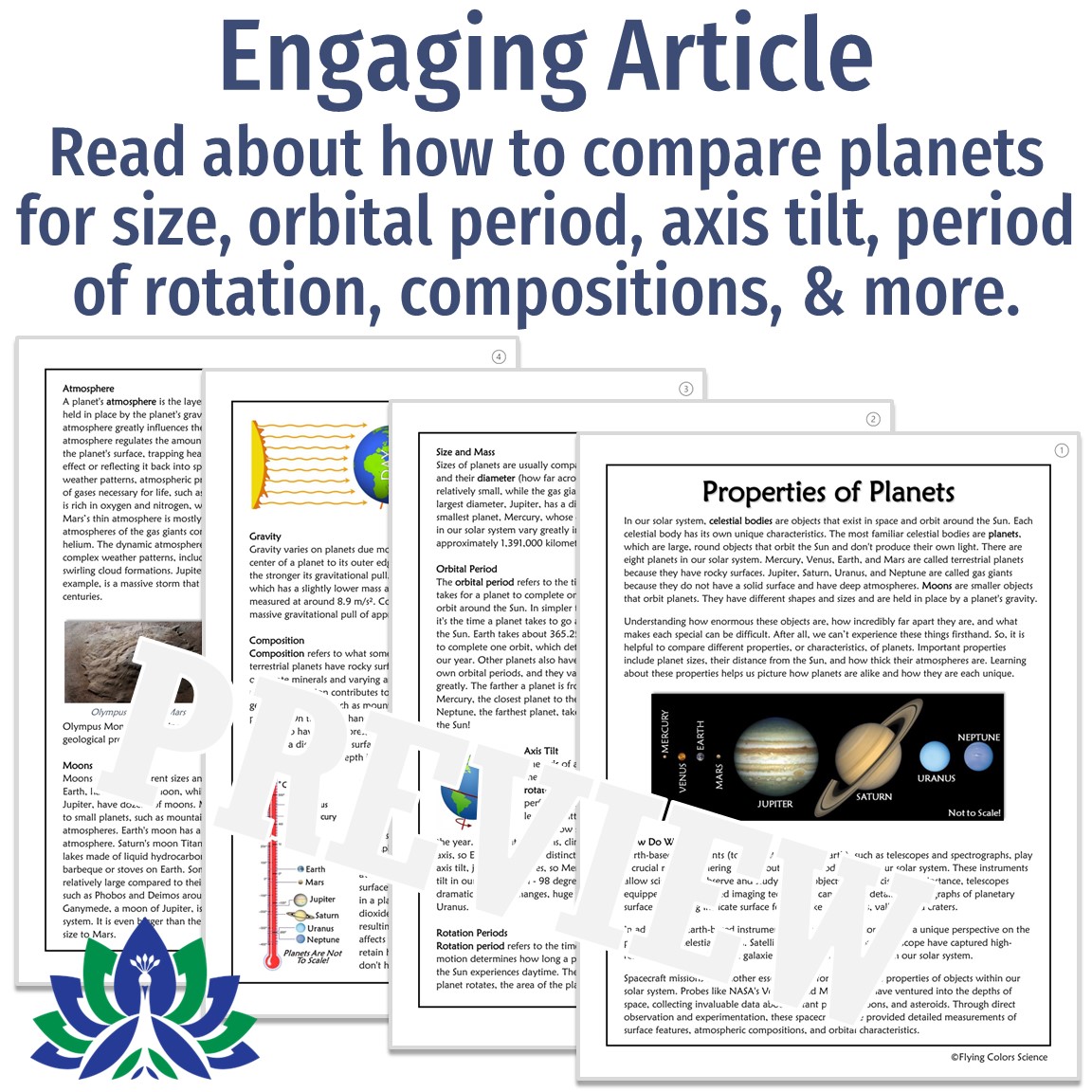
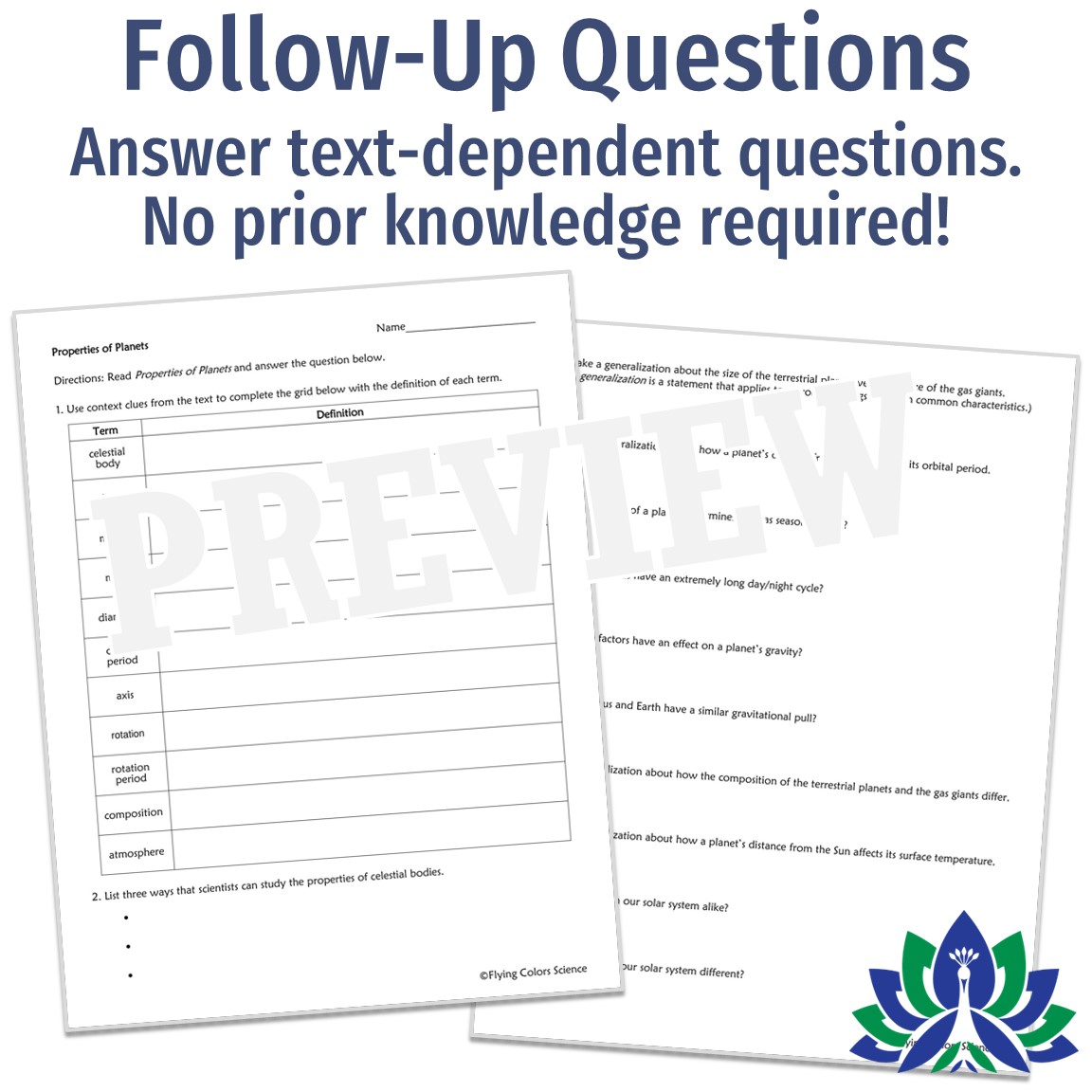
This scale properties of objects in the solar system reading will introduce students to all the ways that celestial bodies can be compared. A great introduction to the topic of planets and our solar system! Perfect for NGSS-MS-ESS1-3!
This guided reading is an INTRODUCTION to key terms and generalizations about scales within the solar system. For example, students will learn:
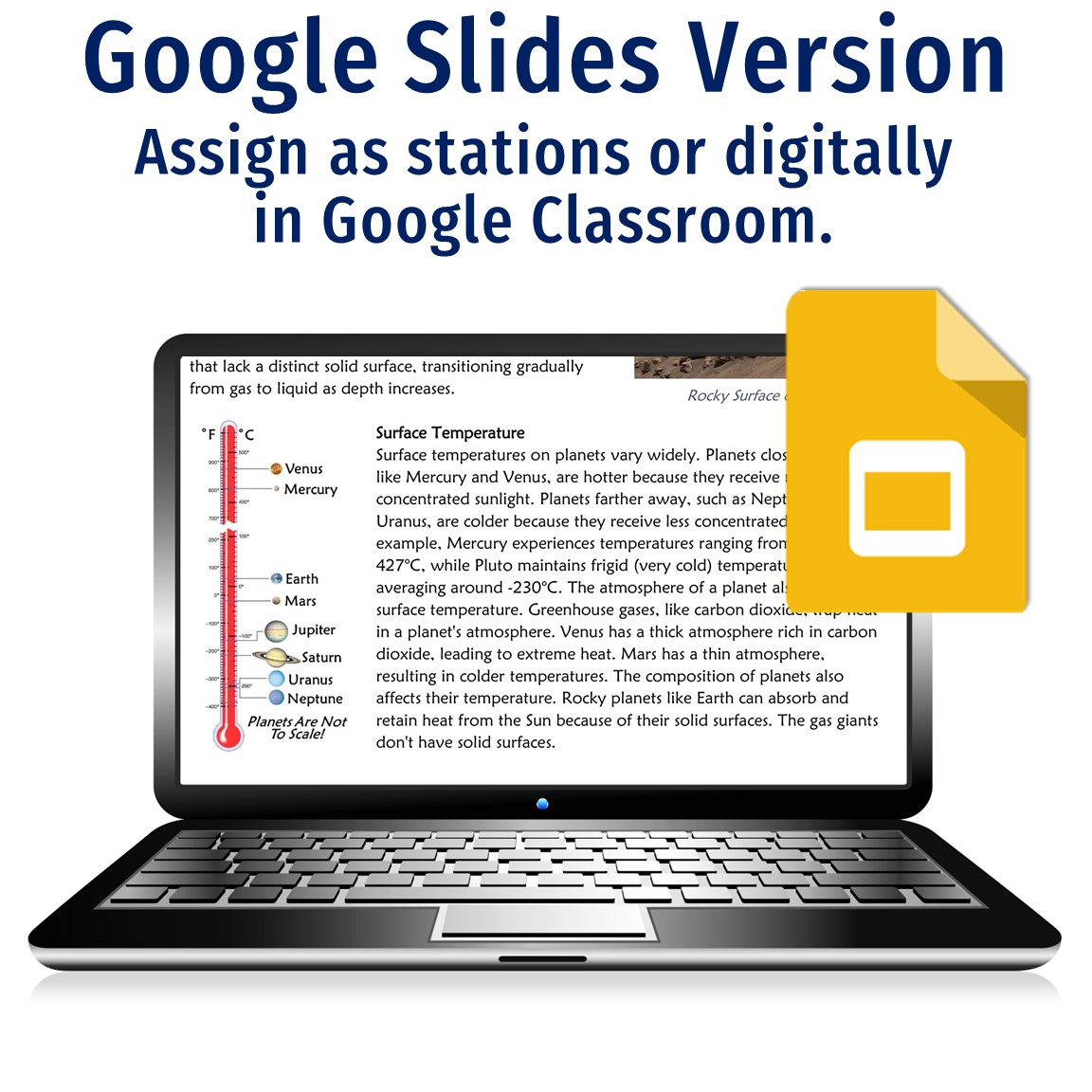
Includes both print and Google Slides options to assign!
In this activity, students will:
Teacher Notes:
Related Standards:
⭐ SAVE $$ – Check out our Astronomy “EXTRA ACTIVITIES” Bundle ⭐
| Cookie | Duration | Description |
|---|---|---|
| cookielawinfo-checkbox-analytics | 11 months | This cookie is set by GDPR Cookie Consent plugin. The cookie is used to store the user consent for the cookies in the category "Analytics". |
| cookielawinfo-checkbox-functional | 11 months | The cookie is set by GDPR cookie consent to record the user consent for the cookies in the category "Functional". |
| cookielawinfo-checkbox-necessary | 11 months | This cookie is set by GDPR Cookie Consent plugin. The cookies is used to store the user consent for the cookies in the category "Necessary". |
| cookielawinfo-checkbox-others | 11 months | This cookie is set by GDPR Cookie Consent plugin. The cookie is used to store the user consent for the cookies in the category "Other. |
| cookielawinfo-checkbox-performance | 11 months | This cookie is set by GDPR Cookie Consent plugin. The cookie is used to store the user consent for the cookies in the category "Performance". |
| viewed_cookie_policy | 11 months | The cookie is set by the GDPR Cookie Consent plugin and is used to store whether or not user has consented to the use of cookies. It does not store any personal data. |