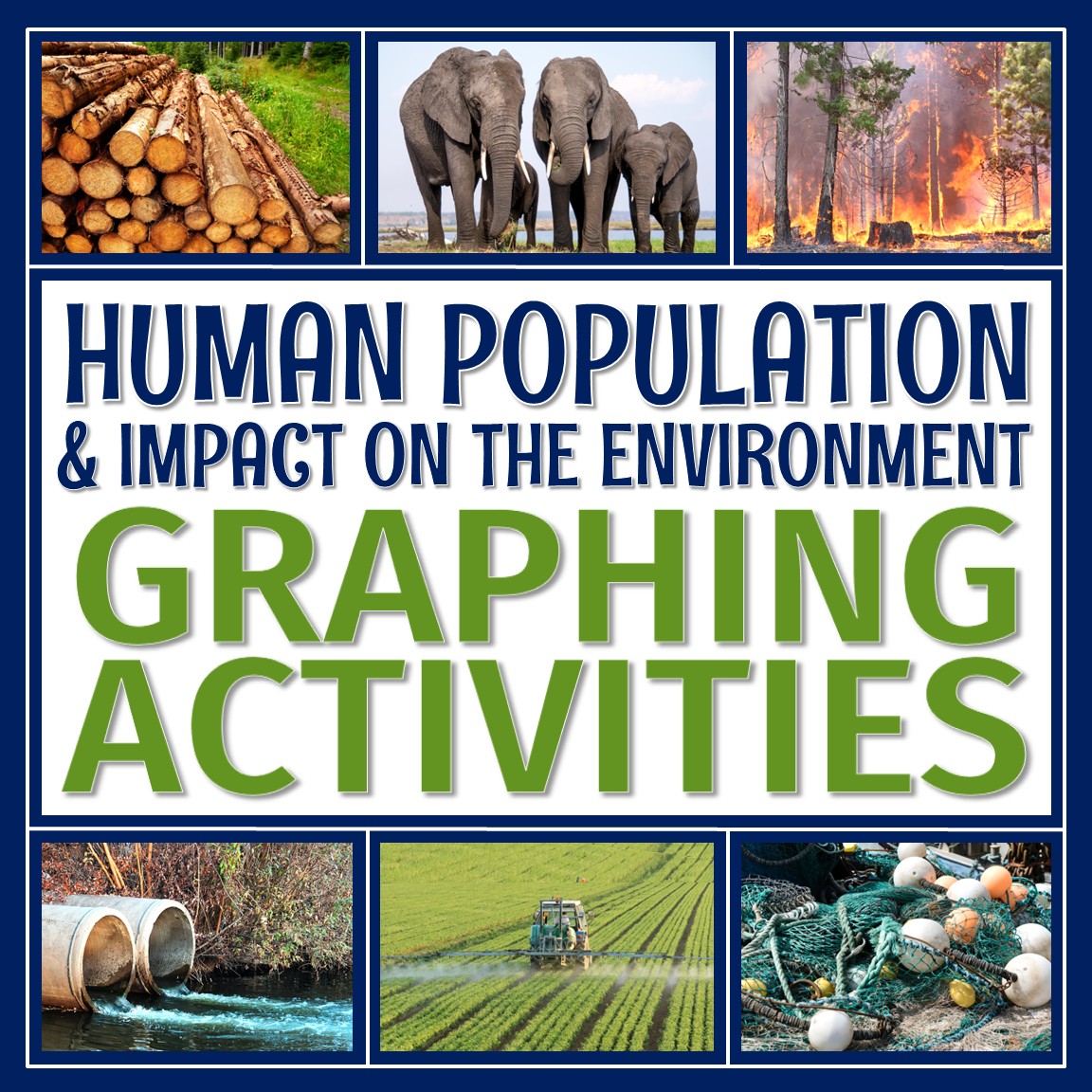
Looking for a more RIGOROUS human impact on Earth lesson? In this human population and impact on Earth’s systems activity, students will practice SCIENCE GRAPHING SKILLS and answer questions in the CLAIMS-EVIDENCE-REASONING format as they extend their learning about human population growth and its impact on the environment!
⭐ Get this activity at a HUGE DISCOUNT in my HUMAN IMPACT UNIT! ⭐
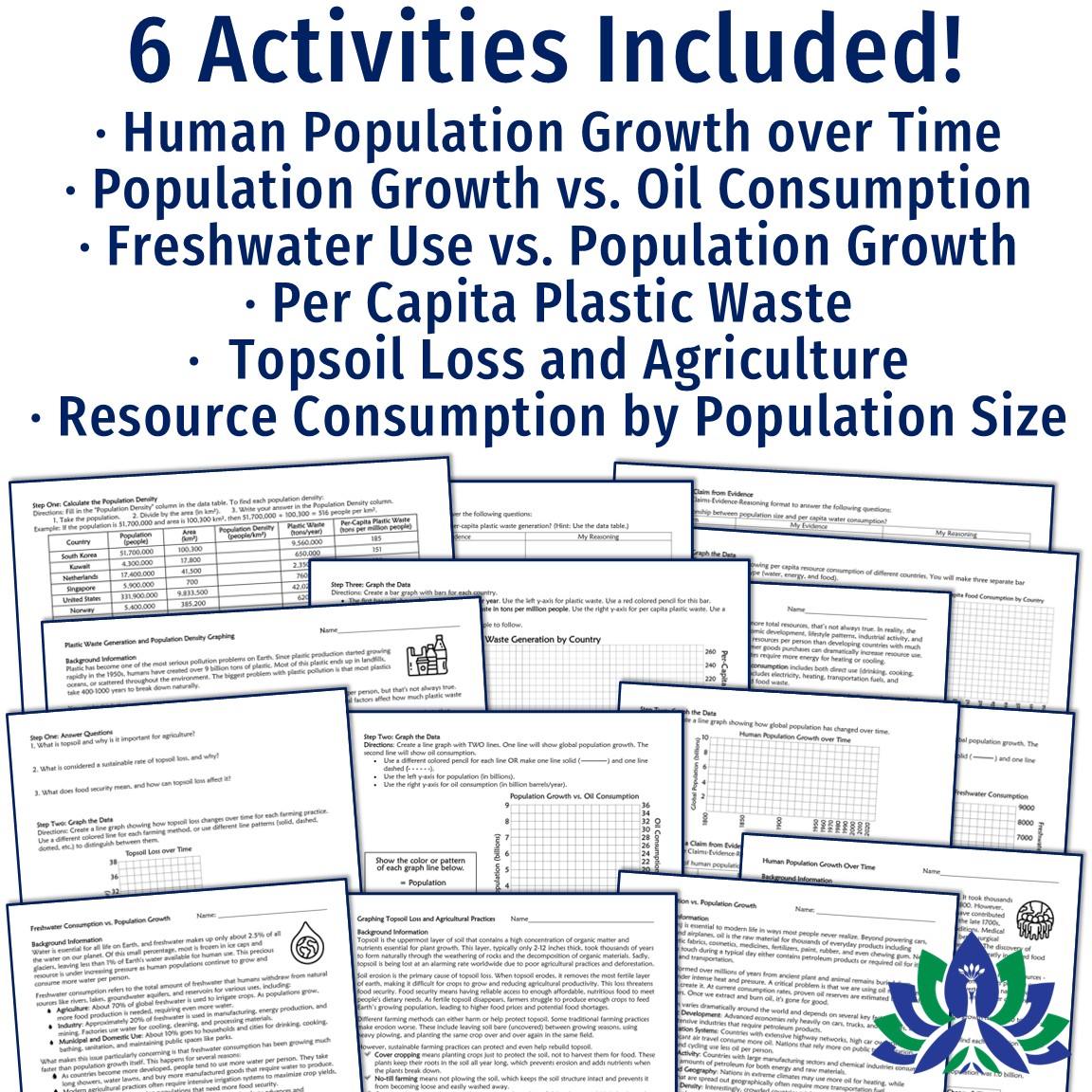
There are SIX graphing activities included. They can be used together or completely independently of each other. They would be great as stations! The format of each activity is the same:
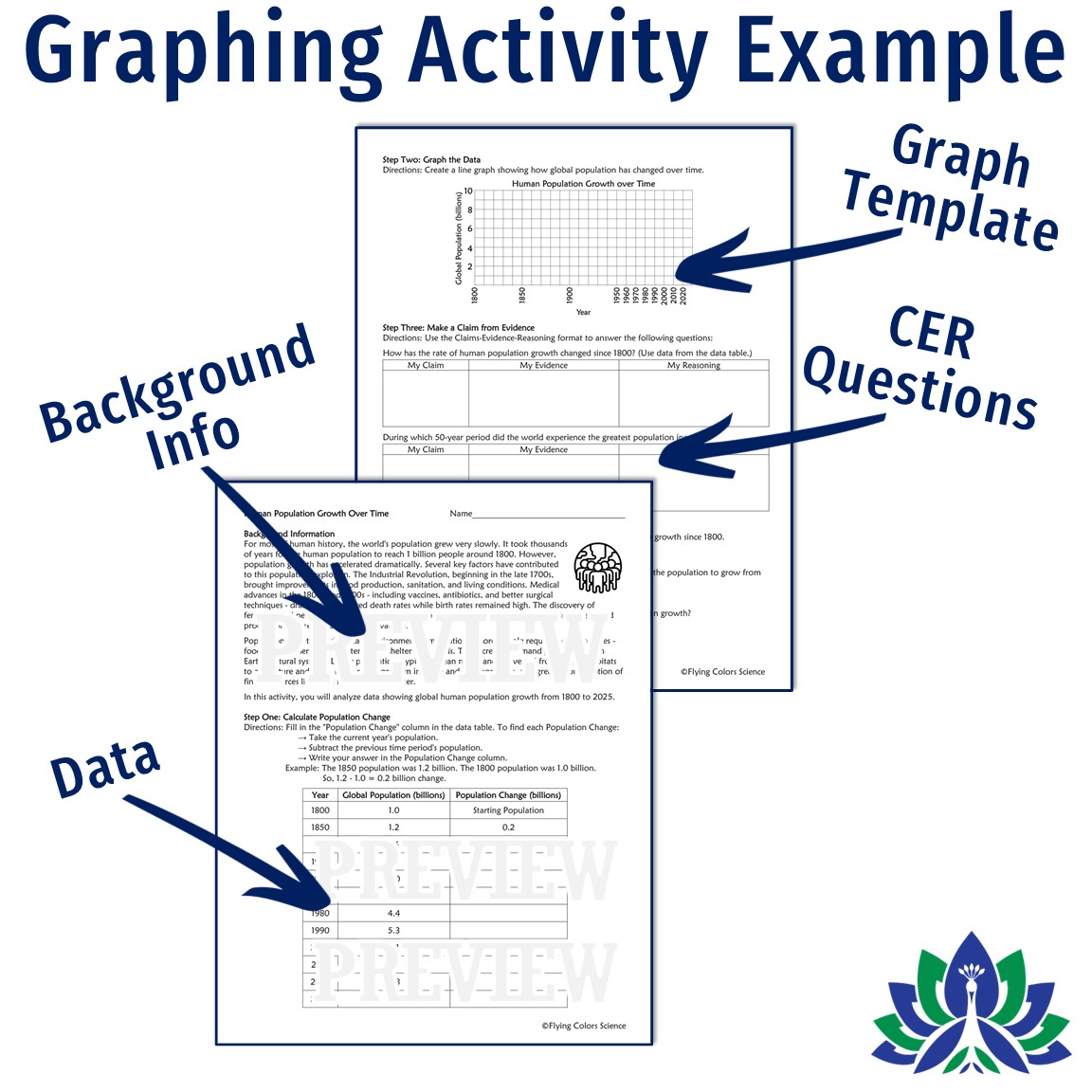
- Students read a brief background information section.
- Students may need to perform simple calculations to complete the data table.
- Students make a graph from the provided data.
- Students answer questions in the claims-evidence-reasoning format using evidence from the data table and graph.
Six Graphing Activities Included:
- Human Population Growth Over Time: Students calculate population change between time periods from 1800-2025, create a line graph showing exponential population growth, and analyze when growth accelerated most rapidly and what factors caused the population boom.
- Oil Consumption vs. Population Growth: Students graph two datasets (global oil consumption and human population from 1960–2025) on the same chart using separate y-axes, then compare slopes to determine which grew faster. They analyze why oil use per person has risen faster than population growth.
- Graphing Topsoil Loss and Agricultural Practices: Students graph topsoil loss over 10 years for five farming methods, then identify which method best reduces erosion. They use data to explain how sustainable practices like cover crops, no-till, and crop rotation maintain soil health and protect against erosion.
- Freshwater Consumption vs. Population Growth: Students graph global freshwater consumption and population from 1960–2025 and determine which increased faster. They analyze why water use per person tends to rise as countries develop and the implications for global water resources.
- Plastic Waste Generation and Population Density: Students calculate population density and per-capita plastic waste for various countries, then create graphs to investigate whether population density relates to per-person plastic waste production.
- Resource Consumption by Population Size: Students calculate per-capita resource consumption (water, energy, food) for 10 countries by dividing total consumption by population, then create bar graphs and analyze whether population size correlates with per-person resource use.
Teacher Notes:
- Includes an answer key.
- Please note that this human population and impact on Earth’s systems activity is not editable.
- You can also shop my TPT store!
- Check out my complete HUMAN IMPACT UNIT!
Related Standards:
- NGSS MS-ESS3-3: Apply scientific principles to design a method for monitoring and minimizing a human impact on the environment.
- NGSS MS-ESS3-4: Construct an argument supported by evidence for how increases in human population and per-capita consumption of natural resources impact Earth’s systems.