List Price $154.70 SAVE MORE THAN 50% and get EVERYTHING YOU NEED to teach ALL of NGSS-MS-LS3: Heredity: Inheritance and Variation of Traits. This is a DONE-FOR-YOU DNA and Heredity Unit!
This ENGAGING, RIGOROUS, and THOROUGH unit has three sections:
- Structure of DNA, DNA Mutations, and Chromosomes (MS-LS3-1)
- Asexual vs. Sexual Reproduction (MS-LS3-2)
- Genetics (MS-LS3-2)
⭐ These are high-quality, high-impact lessons! ⭐
⭐ All of the work has been done for you – from start to finish! ⭐
This comprehensive DNA and heredity unit includes the following resources:
- Unit Plans: Know exactly what to cover and in what order!
- Notes Presentations (8)*: Each presentation comes in PPT and Google Slides, each with a corresponding Cloze worksheet for students to complete as they take notes. Includes separate notes on the structure of DNA, DNA mutations, chromosomes, asexual reproduction, sexual reproduction, factors affecting reproduction, genetics, and Punnett squares.
- Informational Texts (10)*: No textbook required! Each engaging text teaches students about a topic in heredity, including key vocabulary, middle school-appropriate explanations, specific examples, and real-world connections. Article titles include: DNA & Chromosomes, DNA Mutations, DNA to Proteins, Introduction to Enzymes, Asexual Reproduction, Genetic Diversity, What is Genetics?, The Language of Genetics, Punnett Squares, and Pedigrees.
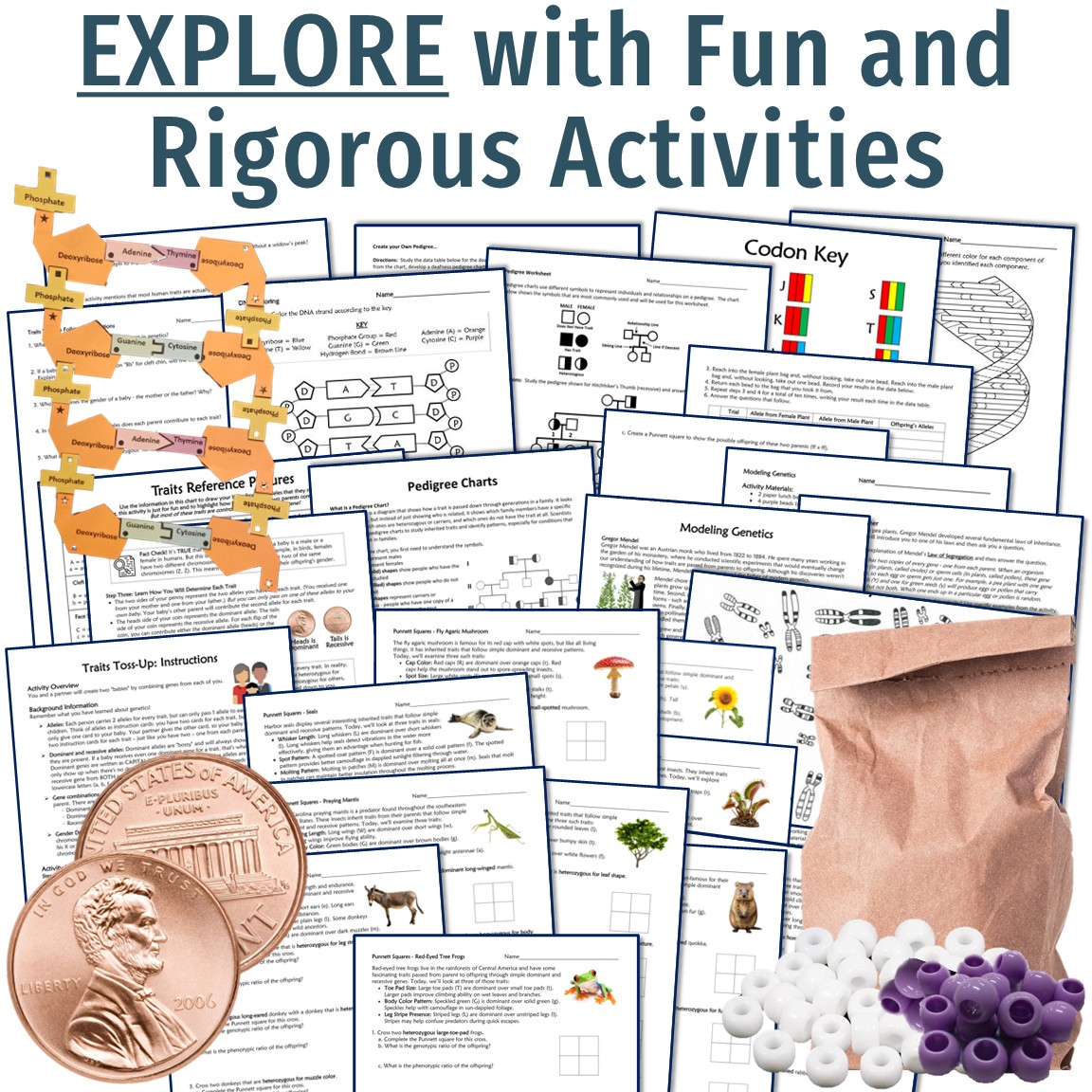
- DNA Coloring Pages: Different versions for easy differentiation!
- DNA Paper Model: Students build a paper model of DNA. Connect to make a giant classroom DNA strand!
- DNA Mutations Activity*: Model how one little change in DNA can completely change the “message.” Kids love this one!
- DNA Mystery: This fun activity gives students a middle-school level introduction to DNA fingerprinting.
- DNA Extraction Lab: Simplified instructions for a middle school audience get reliable results every time.
- DNA to Proteins Activity: Students learn how DNA codes for proteins and why proteins are important – middle school level!
- Graphing Activities (2): Students get a deeper understanding of asexual vs. sexual reproduction by graphing population growth and trait variation in each type of reproduction.
- Reproduction in Plants Activity*: Explore asexual and sexual methods that plants use to reproduce.
- Design a Flower: Get a deeper understanding of how flowering plants use specific types of flowers to reproduce.
- Build a Baby from Chromosomes: Absolute student favorite! Kids can build either a human baby or a koala baby from the chromosomes in two parents’ gametes.
- Life Cycle of Coral: Explore an organism that uses both asexual and sexual reproduction to reproduce.
- Traits Toss Up Paper Lab: Students create babies by flipping coins, using terms such as dominant/recessive, heterozygous/homozygous, and phenotype/genotype.
- Model Punnett Squares Activity: Use simple supplies to model the outcomes of several Punnett squares.
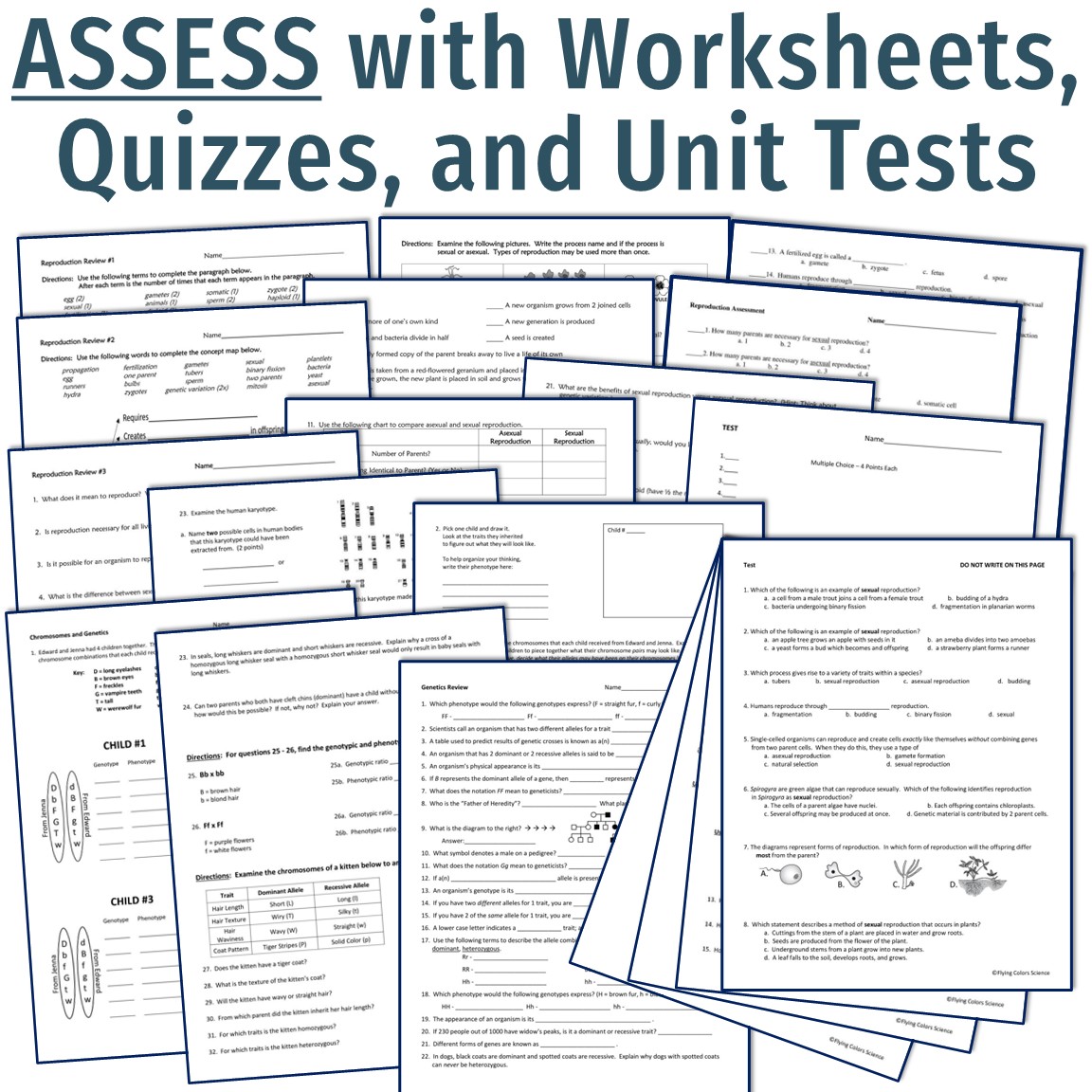
- Worksheets*: Not your typical worksheets! My worksheets are rigorous and provide meaningful practice and reinforcement of the material. No fluff.
- Quizzes: Get multiple-choice check-in quizzes to check for understanding.
- Unit Test*: Three unit tests are provided in both print and self-correcting Google Forms versions.
- Grab-And-Go Sub Plans (3)*: Stay on topic even during an absence with content-based sub plans in your back pocket! Students read articles and answer questions on a related worksheet. Topics include Rosalind Franklin, Gregor Mendel, and a fun favorite – Weird Forms of Asexual Reproduction.
*Skip the line at the copier! The starred resources provide BOTH print and digital Google-based options to assign.
Teacher Notes:
- This unit thoroughly covers EVERYTHING IN THE NGSS LS-3 standard, including MS-LS3-1 and MS-LS3-2. You do not need anything else – no textbook, no other activities, and no other assessments. This is a 100% complete and self-contained unit.
- Answer keys are always provided.
- Please note: The resources in this DNA and heredity unit are NOT editable.
- You can also shop my TPT store!
Related Standards:
- NGSS MS-LS3-1: Develop and use a model to describe why structural changes to genes (mutations) located on chromosomes may affect proteins and may result in harmful, beneficial, or neutral effects to the structure and function of the organism.
- NGSS MS-LS3-2: Develop and use a model to describe why asexual reproduction results in offspring with identical genetic information and sexual reproduction results in offspring with genetic variation. Emphasis is on using models such as Punnett squares, diagrams, and simulations to describe the cause and effect relationship of gene transmission from parent(s) to offspring and resulting genetic variation.