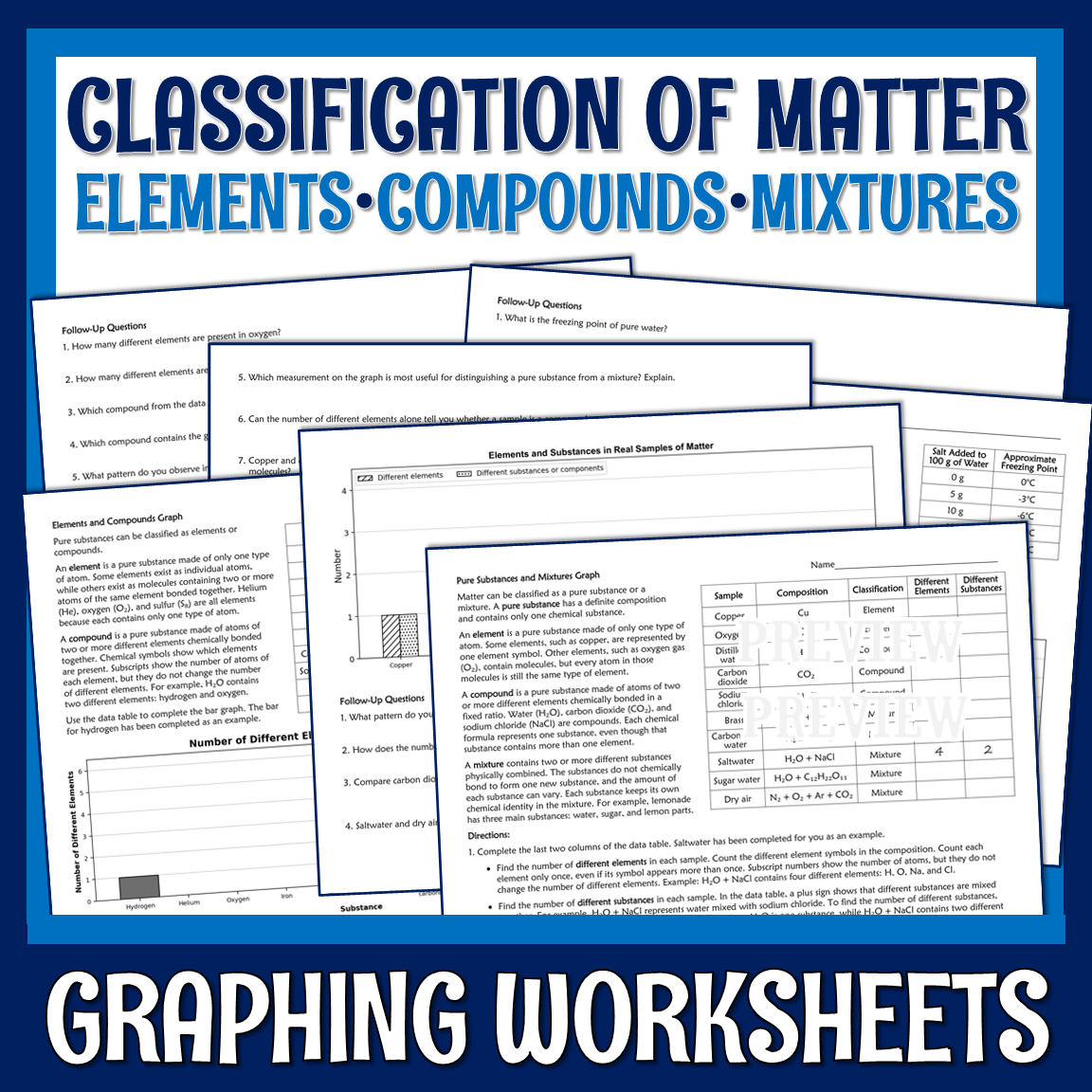
Looking for a more RIGOROUS classification of matter activity? Students will practice SCIENCE GRAPHING SKILLS and analyze data as they extend their learning about elements, compounds, pure substances, and mixtures!
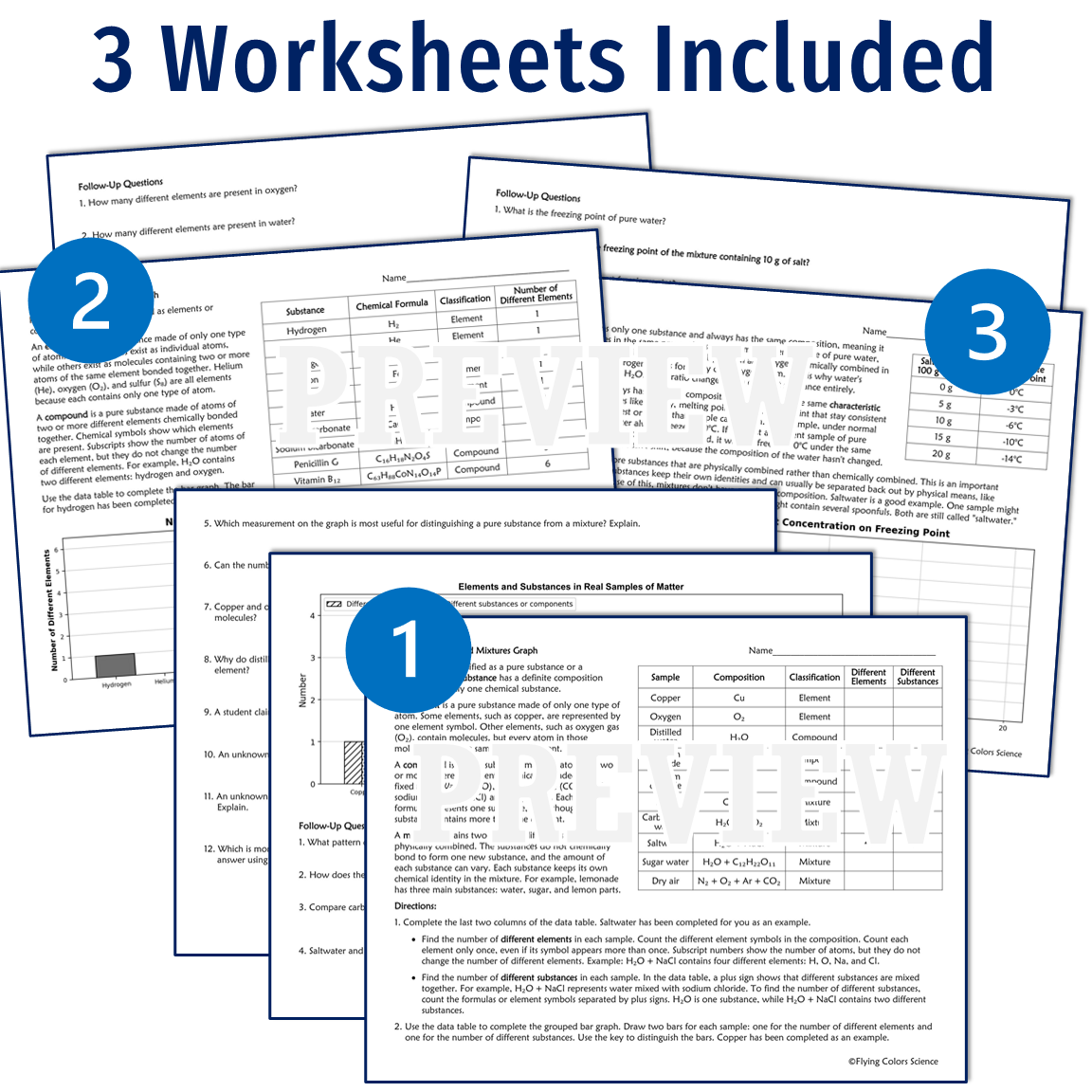
There are THREE graphing activities included. They can be used together or completely independently of each other. The activities move from distinguishing elements and compounds to analyzing mixtures and then comparing elements, compounds, and mixtures using real samples of matter.
⭐ You may also be interested in my complete Classification of Matter Unit! ⭐
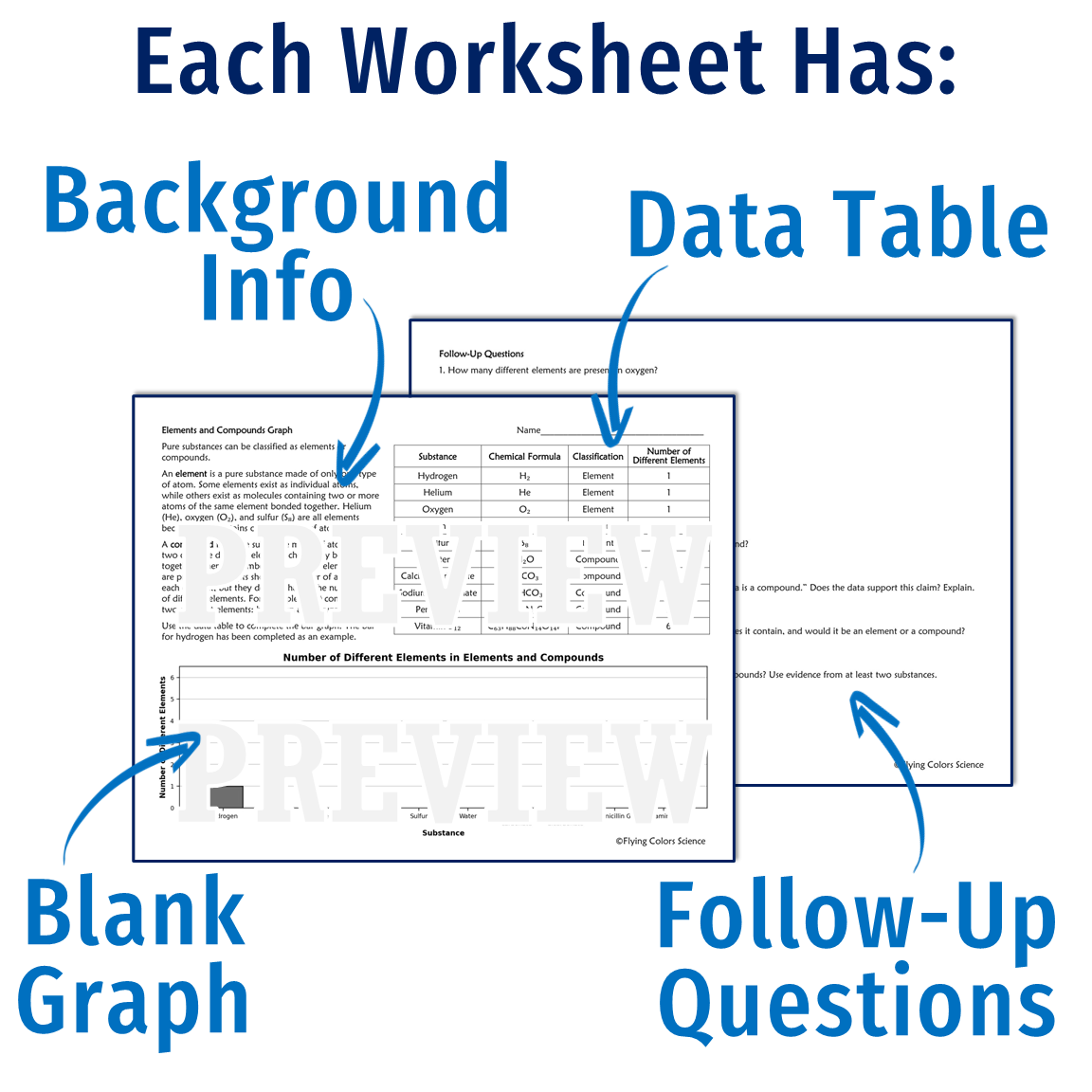
The format of each activity is similar:
- Students read a brief background information section.
- Students complete a graph from the provided data.
- Students analyze their graph and data by answering a variety of questions, including higher-level application and reasoning questions.
3 Graphing Activities Included:
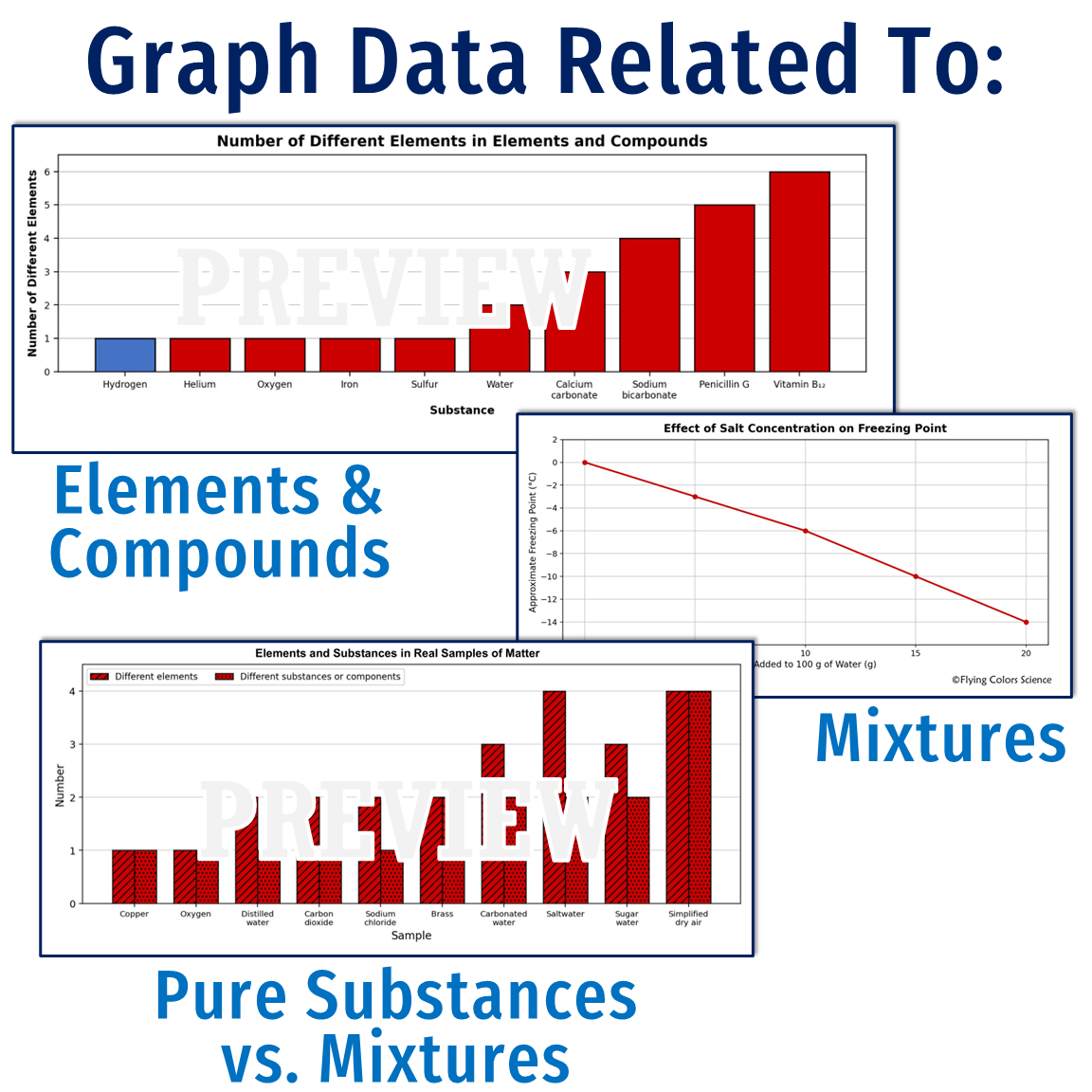
- Elements and Compounds (bar graph): Students graph the number of different elements found in a variety of elements and compounds. They analyze chemical formulas, recognize that elements contain only one type of atom even when multiple atoms are present, distinguish elements from compounds, evaluate claims, and complete a CER response using evidence from the data.
- Properties of Pure Substances and Mixtures (line graph): Students graph how the freezing point of saltwater changes as different amounts of salt are added. They use the data to analyze how changing the composition of a mixture can change its physical properties, make predictions, evaluate claims, and compare the characteristic properties of pure substances with the variable properties of mixtures.
- Elements and Substances in Real Samples of Matter (bar graph): Students analyze real samples including copper, oxygen, distilled water, carbon dioxide, sodium chloride, brass, carbonated water, saltwater, sugar water, and dry air. They determine and graph both the number of different elements and number of different substances in each sample, then use those patterns to distinguish elements, compounds, and mixtures. Higher-level questions challenge students to classify unknown samples, evaluate claims, and explain why the number of substances is more useful than the number of elements for identifying a mixture.
Related NGSS Standards
- NGSS MS-PS1-1: Develop models to describe the atomic composition of simple molecules and extended structures.
Teacher Notes:
- Check out my complete Classification of Matter Unit!
- Answer keys are always included!
- Please note: this classification of matter activity is not editable.
- Great for teaching or reviewing classification of matter, pure substances, elements, compounds, mixtures, chemical formulas, composition, and properties of matter.
- You can also shop my TPT store!