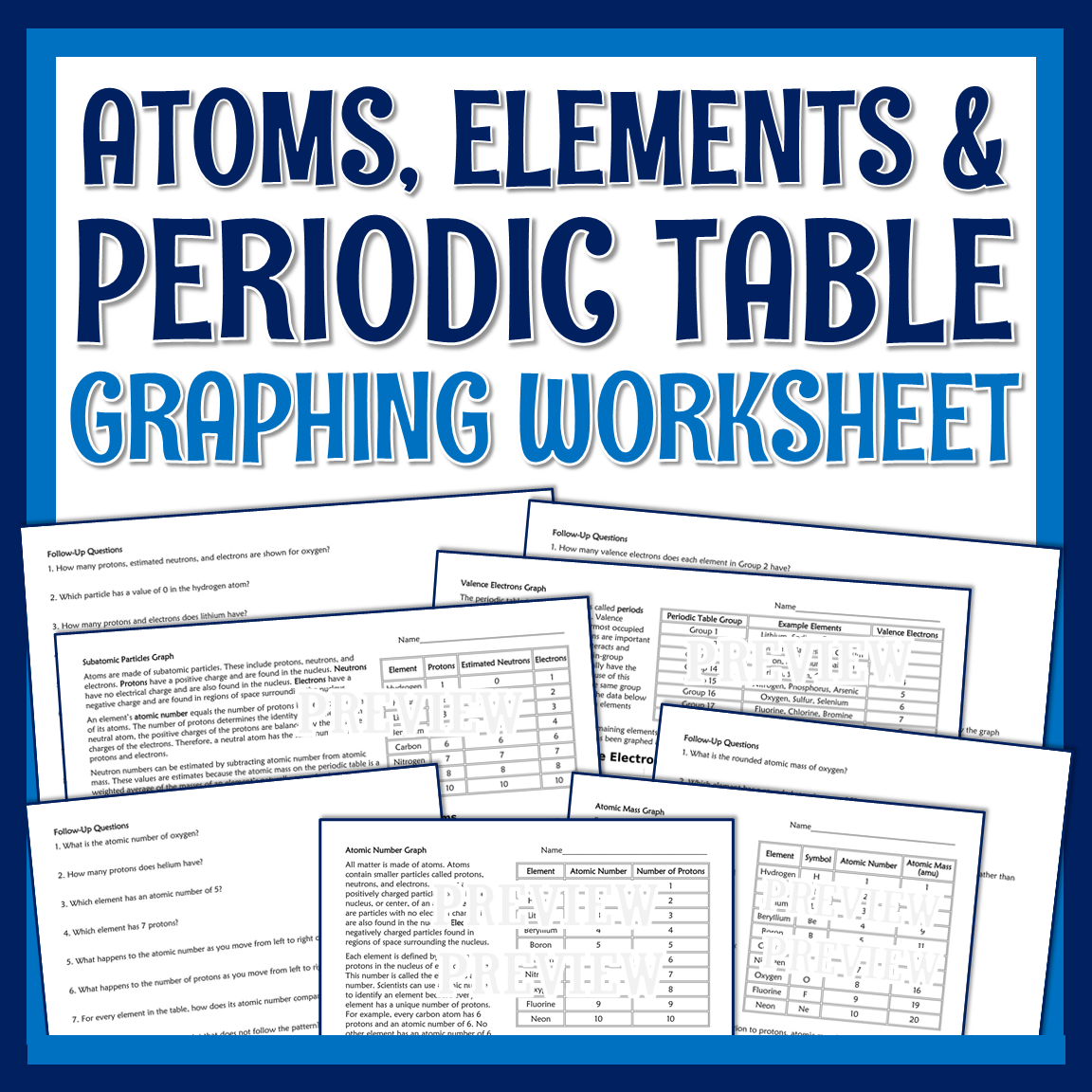
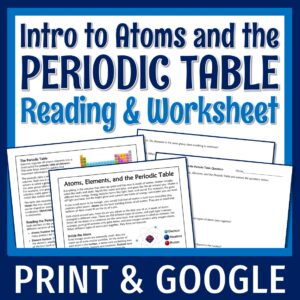
Looking for a more RIGOROUS atoms and periodic table activity? Students will practice SCIENCE GRAPHING SKILLS and analyze data as they extend their learning about atoms, subatomic particles, atomic number, atomic mass, and valence electrons!
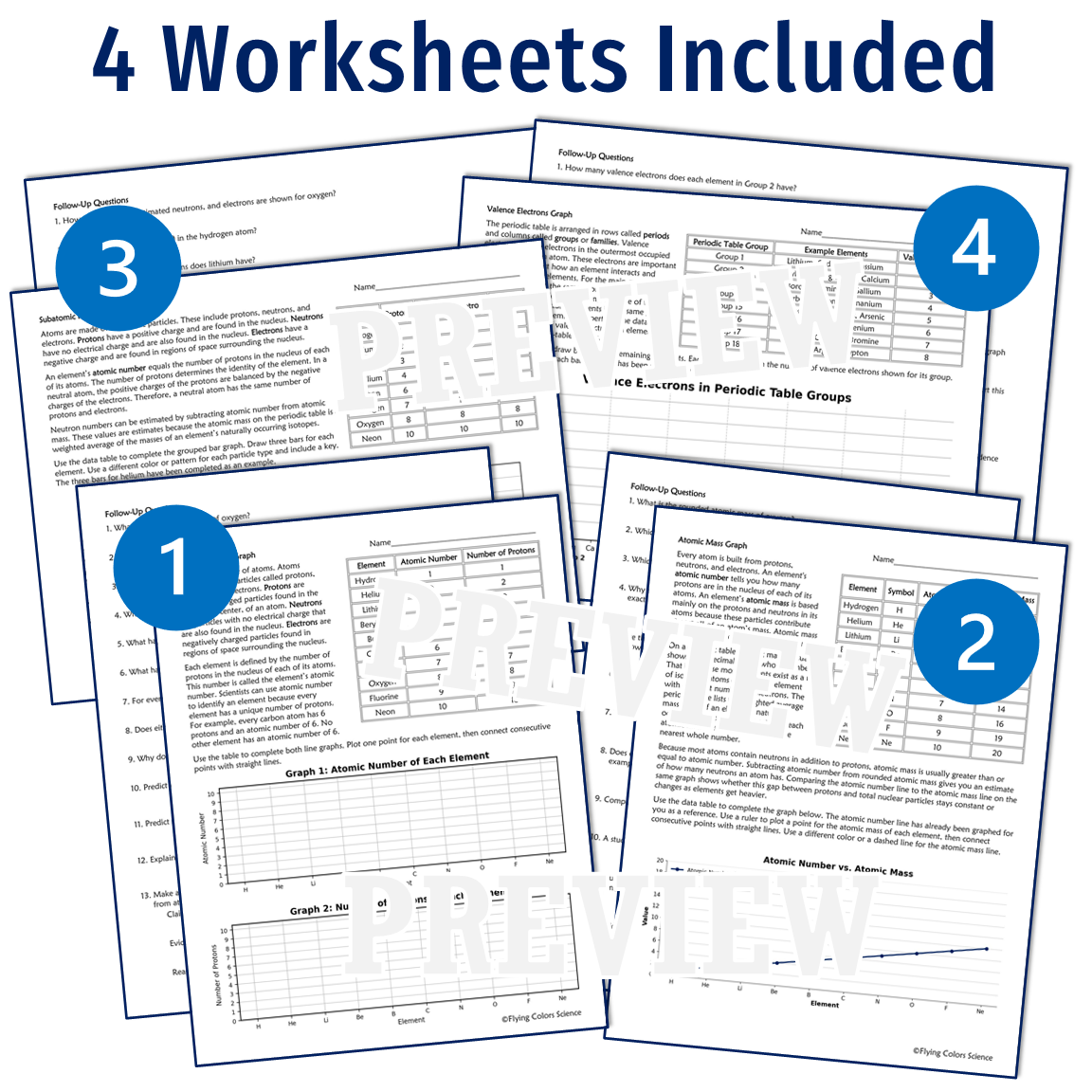
There are FOUR graphing activities included. They can be used together or completely independently of each other.
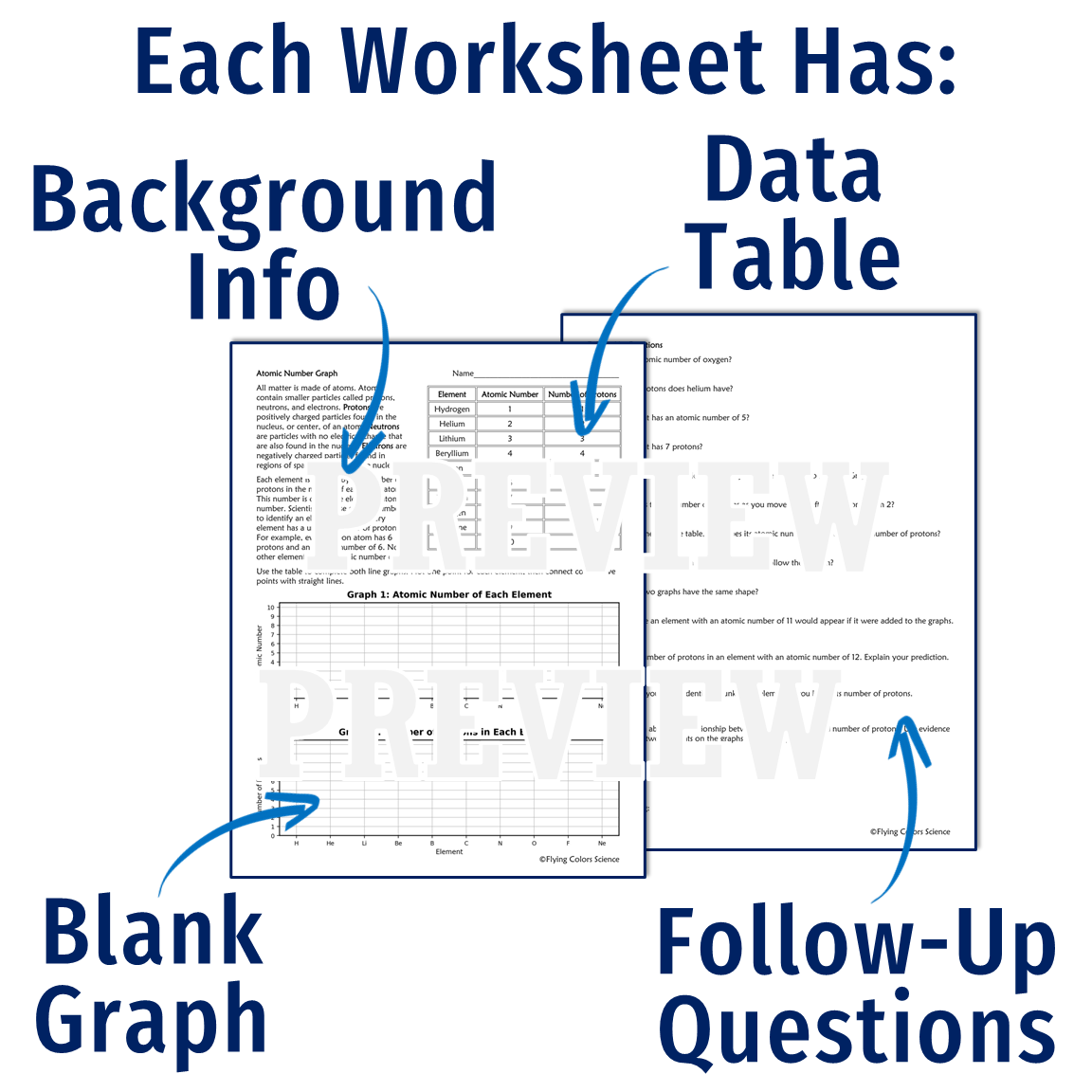
The format of each activity is similar:
- Students read a brief background information section.
- Students complete a graph from the provided data.
- Students analyze their graph and data by answering a variety of questions, including higher-level application and reasoning questions.
4 Graphing Activities Included:
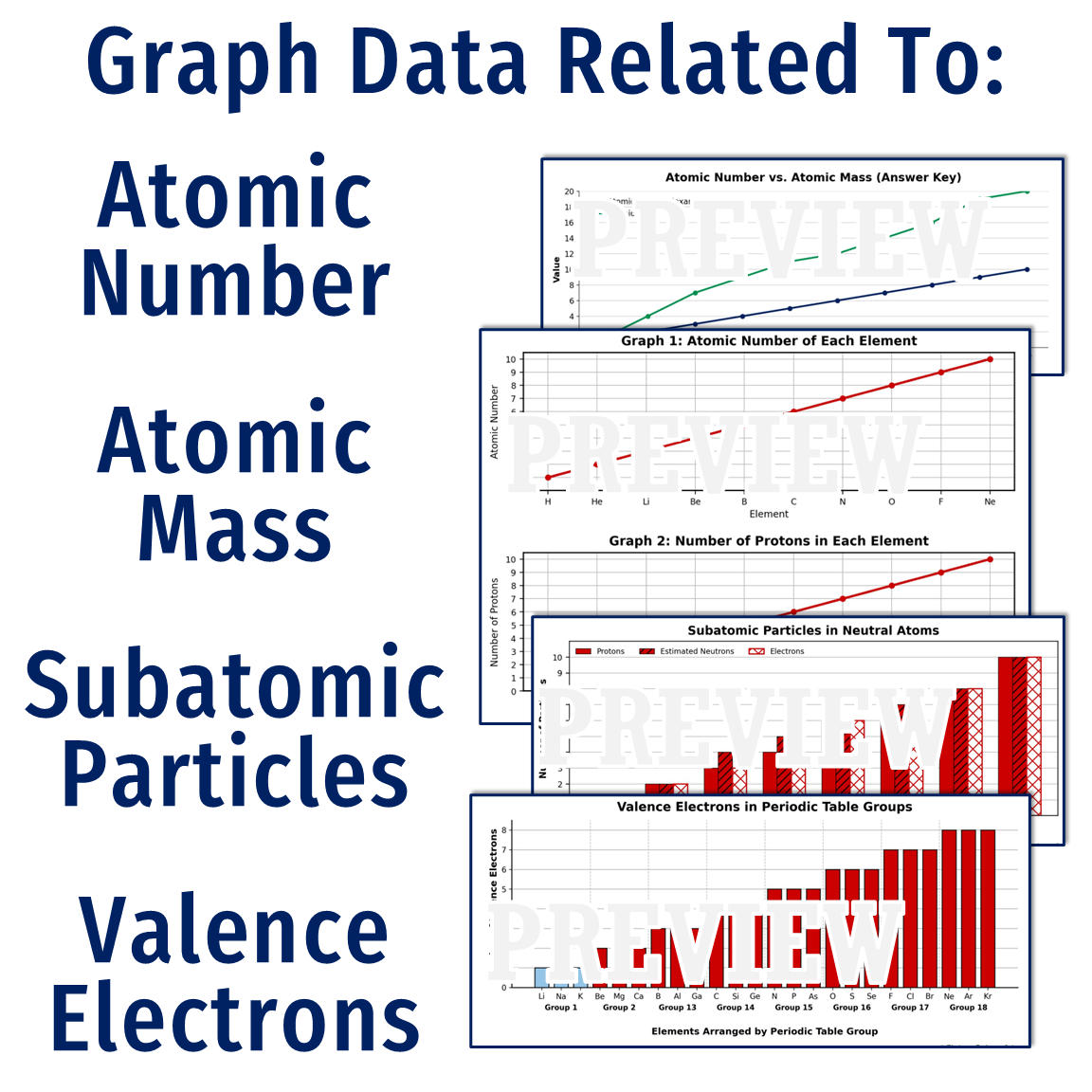
- Subatomic Particles in Neutral Atoms (bar graph): Graph the numbers of protons, neutrons, and electrons in several elements. They use the graph to compare the three subatomic particles, recognize that neutral atoms have equal numbers of protons and electrons, estimate neutron numbers, and identify elements from their numbers of protons or electrons.
- Atomic Number and Number of Protons (line graphs): Create and compare two graphs showing atomic number and number of protons for the first ten elements. Students analyze the identical patterns in the graphs, make predictions for additional elements, and complete a CER response explaining the relationship between atomic number and number of protons.
- Atomic Number vs. Atomic Mass (line graph): Graph rounded atomic mass alongside atomic number and analyze how the two values change across the first ten elements. Students use the data to estimate neutron numbers, compare patterns in atomic number and atomic mass, and make predictions about elements beyond those shown on the graph.
- Valence Electrons in Periodic Table Groups (bar graph): Students graph the number of valence electrons in selected main-group elements and analyze patterns across periodic-table groups. Students use the graph to predict valence electrons for other elements, evaluate a claim about group numbers, and complete a CER response about the relationship between periodic-table groups and valence electrons.
Related NGSS Standards:
- NGSS MS-PS1-1: Develop models to describe the atomic composition of simple molecules and extended structures.
- NGSS HS-PS1-1: Use the periodic table as a model to predict the relative properties of elements based on the patterns of electrons in the outermost energy level of atoms.
Teacher Notes:
- Check out my Periodic Table Unit!
- Answer keys are always included!
- Great for teaching or reviewing atoms, elements, subatomic particles, atomic number, atomic mass, valence electrons, and periodic table patterns.
- Please note: this periodic table activity is not editable.
- You can also shop my TPT store!